Holiday baking season is here · Free local delivery on $250+ in MA & $500+ in RI, NH & ME · Warehouse pickup in Brockton · Shipping chocolate? Add insulated shipping.
Holiday baking season is here · Free local delivery $250+ MA · $500+ RI, NH & ME · Pickup in Brockton
Is Bakery Fruit Filling Better Than Homemade for Cakes?
Last Updated: November 11, 2026
Quick Summary
Bakery fruit filling delivers consistent fruit content, bake stability, and labor savings that a from-scratch recipe struggles to match at volume, while homemade filling wins on control and freshness. Choose the pail for consistency and speed, and a fresh compote when peak-season fruit is the selling point.
Andros Professional fillings are bake-stable, ready to use from the pail, and built around 50% real fruit.
A 2.2 lb pouch suits a shop testing a new flavor; a 22 lb pail suits weekly filling use.
Pectin sets with acid and sugar for a firm gel that slices well between cake layers.
Pipe a buttercream dam around the layer's edge to stop filling from weeping into the sponge.
Cornstarch-thickened fillings turn watery after freeze-thaw cycles, so use them within a day or two.
Pail or homemade for your cake layers?We stock Andros 50% fruit fillings in pouches and bakery pails, ready to ship nationwide.
Bakery Fruit Filling for Cakes: What Professional Bakers Actually Buy
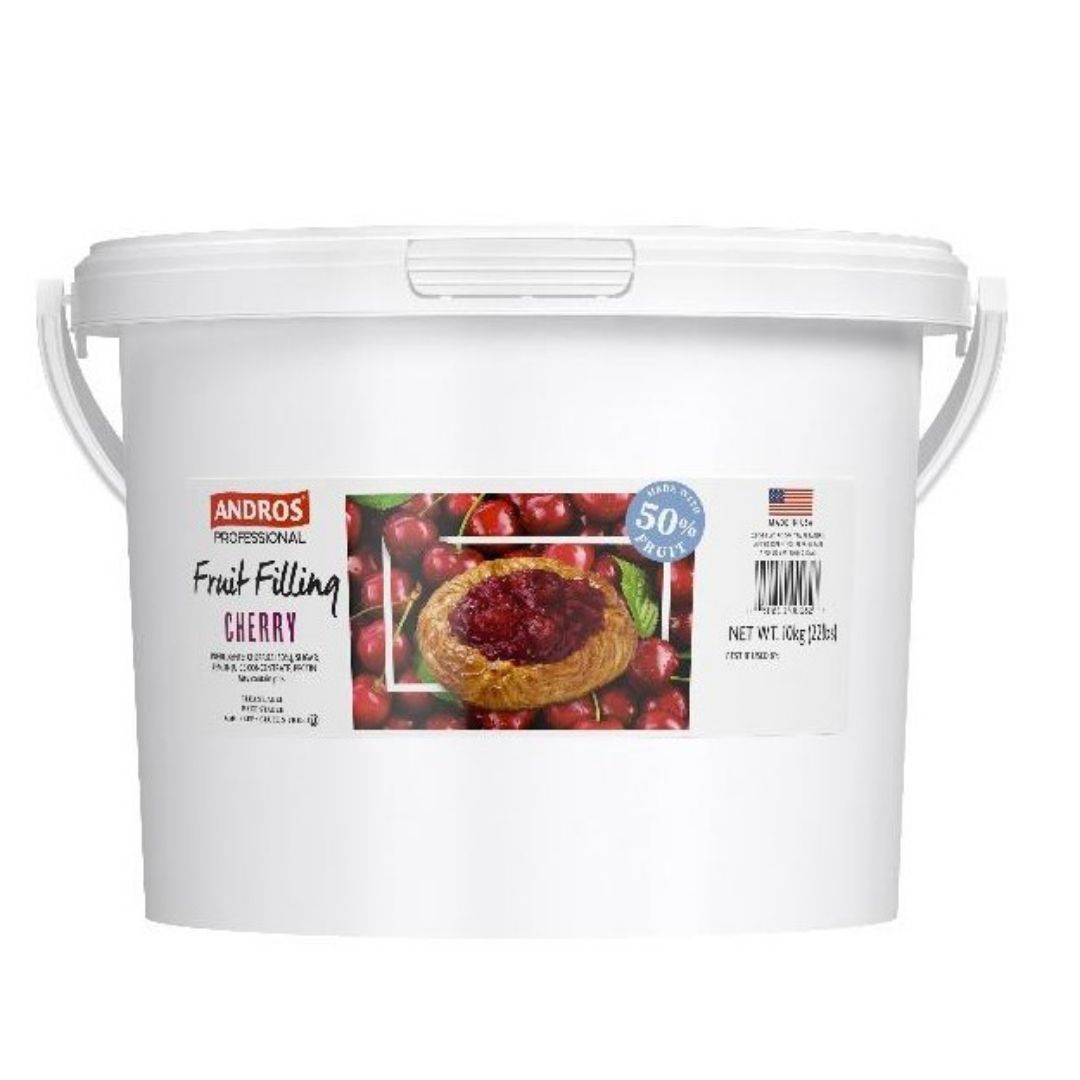
Professional bakers buy bakery fruit filling for cakes because it delivers consistent fruit content, bake stability, and labor savings that a from-scratch recipe struggles to match at volume. At Specialty Food Source in Brockton, MA, we sell Andros Professional fillings at 50% fruit in 22 lb bakery pails.
Here is the honest answer up front: the pail wins on consistency and speed, and homemade wins on control and freshness. Which one you choose depends on how many cakes leave your kitchen on a Saturday.
The global fruit fillings market is projected to reach USD 1.96 billion in 2026, growing at a 5.32% compound annual rate through 2031, according to Mordor Intelligence's fruit fillings market analysis. That growth is driven partly by bakeries standardizing their fillings so a cherry layer tastes the same in March as it does in July.
Below, we break down what each option actually delivers, how to read a pail label, and where a fresh fruit cake filling recipe still earns its place.
Quick Comparison: Andros Fruit Fillings for Cake Work
Andros Professional fillings are bake-stable, ready to use straight from the pail, and built around 50% real fruit. The five varieties we stock cover most cake programs, from a classic cherry layer to a tropical guava filling.
Filling
Best Cake Application
Why It Works
Cherry 50% Fruit
Black Forest layers, cherry bars
Holds shape when baked
Apricot 50% Fruit
Almond-apricot tortes, danish
Balanced tartness cuts sweetness
Blueberry 50% Fruit
Lemon-blueberry layers, muffins
Berry pieces survive the oven
Pink Guava 50% Fruit
Tropical cakes, celebration tiers
Distinctive flavor, strong color
Strawberry 50% Fruit
Filled donuts, shortcakes, small batches
Clean label: fruit, sugar, lemon juice, pectin
The strawberry pouch is the one to start with if you are testing the water. It is a small commitment, and it tells you fast whether a pail makes sense for your volume.
Shelf-Stable Fruit Filling for Cakes: What the Label Tells You
Shelf-stable fruit filling for cakes is a fruit preparation stabilized with pectin or starch so it holds its texture without refrigeration until opened. The label tells you three things that matter: fruit content, thickener type, and storage instructions.
Read the ingredient statement first. The Andros strawberry filling lists fruit, sugar, lemon juice, and pectin. That is a short list, and short lists are easier to defend to a customer who asks what is in the cake.
Fruit content is the second number to check. A 50% fruit filling is half fruit by weight, which is why it tastes like fruit rather than syrup. Lower-percentage fillings lean harder on sugar and starch to build body.
Pectin versus starch matters for your application. Pectin sets with acid and sugar and gives a clean, firm gel that slices well between cake layers. Starch-stabilized fillings are softer and more forgiving in high-heat baking. Both have their place, and neither is "better" without knowing what you are making.
Watch out: a filling labeled shelf-stable is stable sealed, not after you open it. Scoop with a clean utensil, reseal the pail, and store it in a cool, dry place as the label directs.
For an example of a pail ingredient with clear storage and use details, you can browse the Domino invert sugar pail we stock for moist cakes, icings, and fillings.
When a Fresh Fruit Cake Filling Recipe Beats the Pail
A fresh fruit cake filling recipe beats the pail when the fruit itself is the selling point, not the convenience. If your menu says "local strawberry shortcake" and customers can taste the difference, a cooked fresh compote earns its labor.
Start with the fruit-to-sugar ratio. A workable starting point most practitioners use is roughly 4 parts prepared fruit to 1 part sugar by weight for berries, moving toward 3 to 1 for tart stone fruit like apricots and sour cherries.
Then choose your thickener and measure it against the fruit's natural pectin. Strawberries, blueberries, and cherries are low-pectin fruits and need help. Apples, quince, and citrus peel are high-pectin and will set with less added thickener.
A cornstarch slurry gives a softer, spoonable set that suits layer fillings and shortcakes.
Watch out: cornstarch-thickened fillings break down and turn watery after repeated freeze-thaw cycles or several days in the refrigerator, so they are best used within a day or two. Pectin gels hold up better to chilling and transport.
The method itself is short:
Clean and cut the fruit, keeping pieces uniform so they cook evenly.
Macerate with the sugar for 20 to 30 minutes to draw out juice.
Cook gently until the fruit softens and releases its liquid.
Whisk in the slurry or pectin and cook until the set is visible.
Add lemon juice off the heat for brightness and to help pectin set.
Cool completely before filling, and chill the filled cake so the gel firms.
Where homemade wins:
Peak-season fruit with flavor a preserved filling cannot replicate
Menus built around a specific farm or variety
Small batches where labor is not the constraint
Fillings served fresh, within a day or two
Where it loses: consistency. A compote made in June from ripe berries and one made in December from shipped fruit will not taste the same, and your regulars notice.
The USDA FoodData Central database is a useful reference when you are comparing the sugar and moisture content of fresh fruit against a prepared filling, since moisture is what drives most layer-cake failures.
Fruit Filling for Pastries and the Piping Dam That Saves a Layer Cake
Fruit filling for pastries and cakes fails for one reason most of the time: moisture migration. The filling weeps into the sponge, the layer slumps, and the cake collapses under its own weight.
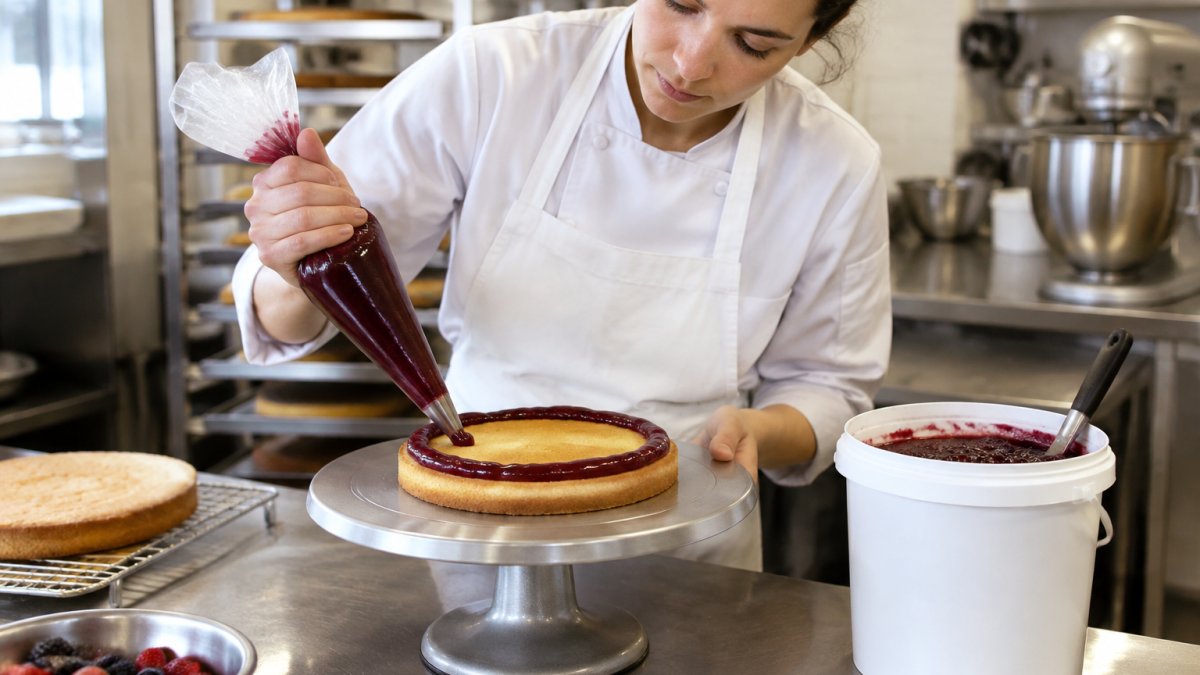
The fix is a piping dam.
Pastry chef piping a ring of red fruit filling onto a cake layer on a metal turntable in a bakery kitchen
Pipe a ring of buttercream around the outer edge of the bottom layer.
Fill the center with fruit filling, staying inside the dam.
Smooth the filling level with an offset spatula.
Cap with the next layer and press gently to seat it.
Chill the stacked cake before final icing so the dam sets.
The dam does two jobs: it holds the filling in place and it blocks moisture from reaching the cut edge of the sponge. A thin layer of clear piping gel brushed over the sponge before filling adds a second barrier, and it is the trick most guides skip.
Each Andros variety has a cake program it fits better than the rest. Matching the fruit to the application is where a bakery gets the most out of a pail.
Cherry is the Black Forest workhorse. The pieces hold through baking, and the flavor reads as classic rather than artificial. It is also the most forgiving filling for a bakery still dialing in its dam technique.
Apricot is the one pastry chefs underrate. Its tartness cuts through almond and butter, which is why it pairs so well in a torte. If your cakes skew sweet, apricot balances them.
Blueberry brings visible fruit pieces to the cut face of a slice, and that visual appeal matters. The bakery fillings market is projected to grow at an 11.4% annual rate from 2026 to 2033, driven partly by the rising importance of how baked goods look, according to market research reported via LinkedIn Pulse.
Pink Guava is the differentiator. It gives a celebration cake a flavor and color most competitors in your market are not offering.
Strawberry is the clean-label flagship, and the 2.2 lb pouch makes it the easiest entry point for a small shop.
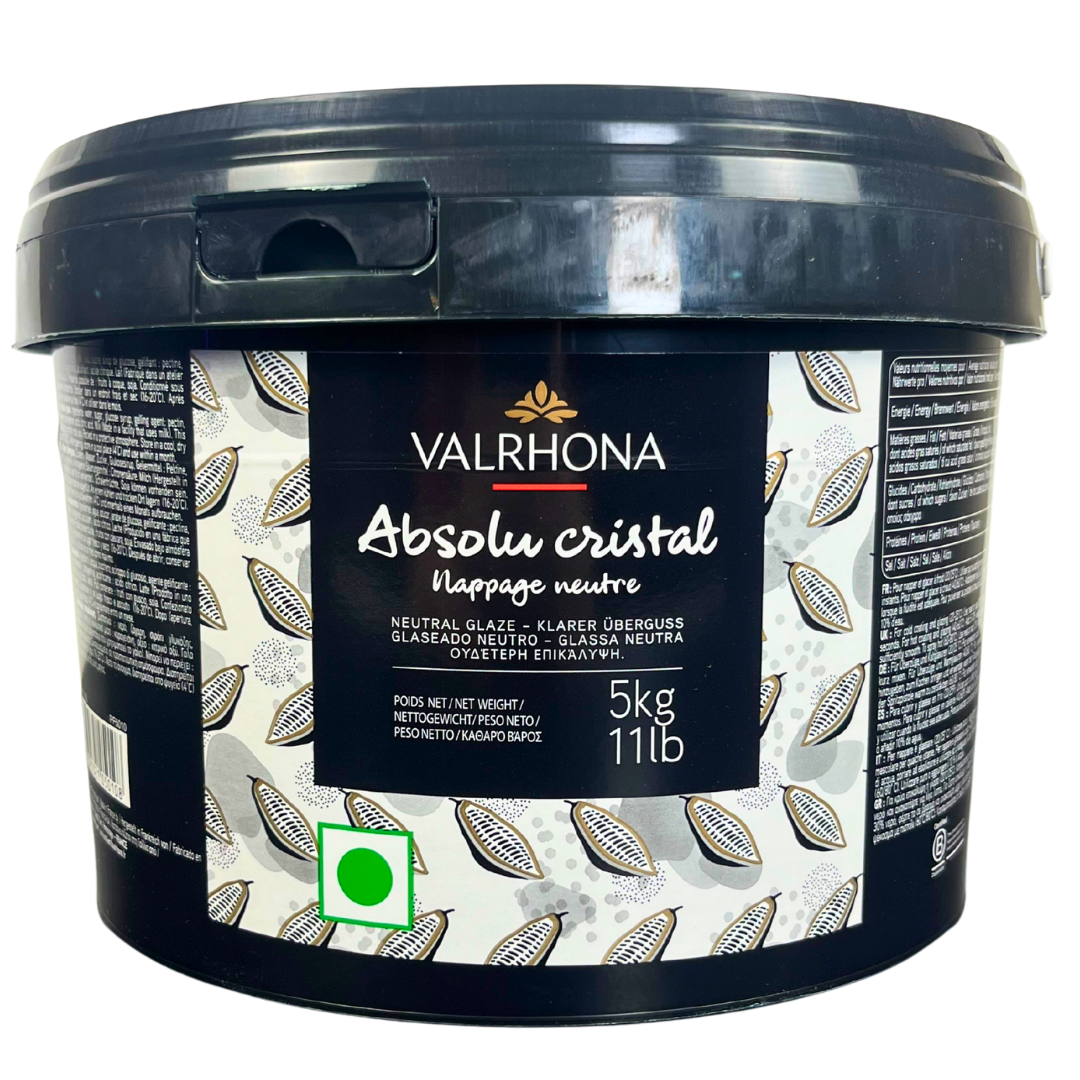
To finish and seal a fruit-topped cake, the neutral glaze nappage we carry gives the fruit a professional sheen and a moisture barrier in one step.
Valrhona Absolu Cristal Neutral Glaze – Ready-to-Use Mirror Glaze for Pastry & Desserts – 5kg Tub
Ordering Cake Fillings for a Brockton Kitchen
Ordering cake fillings for a Brockton kitchen comes down to four decisions: format, volume, the make-or-buy math, and how the product ships. Get those right and reordering becomes routine.
Format first. A 2.2 lb pouch suits a shop testing a new flavor or running a small donut program. A 22 lb pail suits a bakery going through filling every week. Buy the pouch before you commit to the pail.
Volume second. Buying more items lowers your shipping cost per unit, and our bundle-and-save feature increases the savings further.
The make-or-buy math is worth working through before you decide whether a pail is right for you. A from-scratch filling carries three costs: the fruit itself, the sugar and thickener, and the kitchen labor to clean, cut, cook, cool, and clean up. A prepared filling trades that labor for a consistent result. The break-even point depends on your hourly rate, your batch size, and how much of your week you want to spend at the stove. Run the numbers for your own volume before you decide.
Shipping third. Local delivery covers qualifying orders across Eastern Massachusetts and New England, with warehouse pickup available in Brockton.
A bake-stable filling with a high fruit content holds up best between layers. Andros Professional fillings are 50% fruit and bake-stable, and cherry and apricot hold their shape well through baking. Pipe a ring of filling inside a buttercream dam so the weight of the upper layer does not push it toward the edge.
How do you keep fruit filling from making a cake soggy?
Moisture migration is the cause, and the fix is a barrier. Spread a thin layer of buttercream or ganache on the cake surface before the fruit filling goes down, then pipe a dam around the perimeter. A bake-stable, starch-stabilized filling releases less free liquid than a loose compote, so it stays where you put it. Assemble the cake close to serving when you can, and chill it so the filling sets before slicing.
Which fruit fillings are shelf-stable before opening?
Bakery pails like the Andros Professional line are formulated to be shelf-stable before opening and should be stored sealed in a cool, dry place. Once opened, keep the container sealed between uses and scoop with a clean utensil. Check each product label for its own storage statement, because a 2.2 lb pouch and a 22 lb pail are not always handled the same way after opening.
Can you make fruit filling for cakes with fresh or frozen fruit?
Yes, and both work. Fresh fruit gives the brightest flavor in season, while frozen fruit is picked at peak ripeness and is often more consistent for year-round production. Cook the fruit down with sugar and a thickener such as cornstarch or pectin, simmer until it coats a spoon, then cool fully before piping. A fresh fruit cake filling recipe needs a setting point you can test, or it will weep into the sponge.
What fruit fillings pair well with chocolate cake?
Cherry and apricot are the safest pairings for chocolate, and pink guava adds a tropical note that stands up to dark cocoa. Berry fillings work when you want acidity to cut the richness. Keep the filling layer thin against chocolate sponge so the fruit does not overwhelm the cocoa, and match the buttercream to the fruit rather than adding a third flavor.