Fall baking season is here · Free local delivery on $250+ in MA & $500+ in RI, NH & ME · Warehouse pickup in Brockton · Shipping chocolate? Add insulated shipping.
Fall baking season is here · Free local delivery $250+ MA · $500+ RI, NH & ME · Pickup in Brockton
How to Source Heirloom Grain Flour: A Buyer's Guide
Last Updated: October 30, 2026
Quick Summary
To source heirloom grain flour well, confirm the exact grain variety, ask when it was milled, and bake a sample before buying in bulk. Heirloom flours differ widely in quality because of variety, growing conditions, and milling method, so a heirloom label alone is not enough.
Ask for the exact grain name, such as Bronze Chief or einkorn, not a general heirloom label.
Ask when the flour was milled, since fresher flour performs more predictably.
Request a sample and bake a small test batch before buying in bulk.
Check that bags are sealed and food-grade to protect against moisture and pests.
Store flour in an airtight container in a cool, dry place, and label it with the milling date.
What Heirloom Grains Are and Why Flour Quality Varies
Heirloom grains are older wheat, rye, and other cereal varieties that were grown long before modern hybrid breeding standardized the commercial supply. Because they were bred for flavor and regional growing conditions rather than uniform yield, heirloom grain flour can differ noticeably from the all-purpose flour on a supermarket shelf. Specialty Food Source carries a range of ancient and heritage grains. Knowing how to source them well starts with understanding why flour quality varies so much.
Quality depends on three things: the grain variety, how it was grown, and how it was milled. Two bags labeled "heirloom" can behave very differently in the oven if one was stone-ground soon after harvest and the other sat in a warehouse for months. Milling method matters as well. Stone-milled flour keeps more of the bran and germ, which adds flavor and nutrients but also shortens shelf life.
Watch out: a heirloom label alone does not guarantee quality. Ask the supplier when the grain was milled and whether it was sold whole or as flour.
Types of Heirloom Grains and Their Flours
The most common heirloom grains used for flour include einkorn, spelt, and heritage red wheat. Each behaves differently in dough.
Einkorn: An ancient wheat with a lower gluten profile. Its flour is soft and slightly golden, and it suits quick breads and flatbreads better than tall sandwich loaves.
Spelt: A hulled ancient wheat with a nutty flavor. Spelt flour is more forgiving than einkorn, though it absorbs water differently than modern wheat.
Heritage red wheat: Varieties such as Bronze Chief produce denser, darker bread with a strong, earthy character.
Specialty Food Source stocks einkorn flour in whole wheat and all-purpose versions, along with spelt berries and heritage wheat berries.
Where to Find Local Grain Mills in New England
When you search for grain mills near you, look for mills that list the grain variety, harvest year, and milling date on each bag. Mills that can answer those questions without hesitation are usually the ones worth a visit.
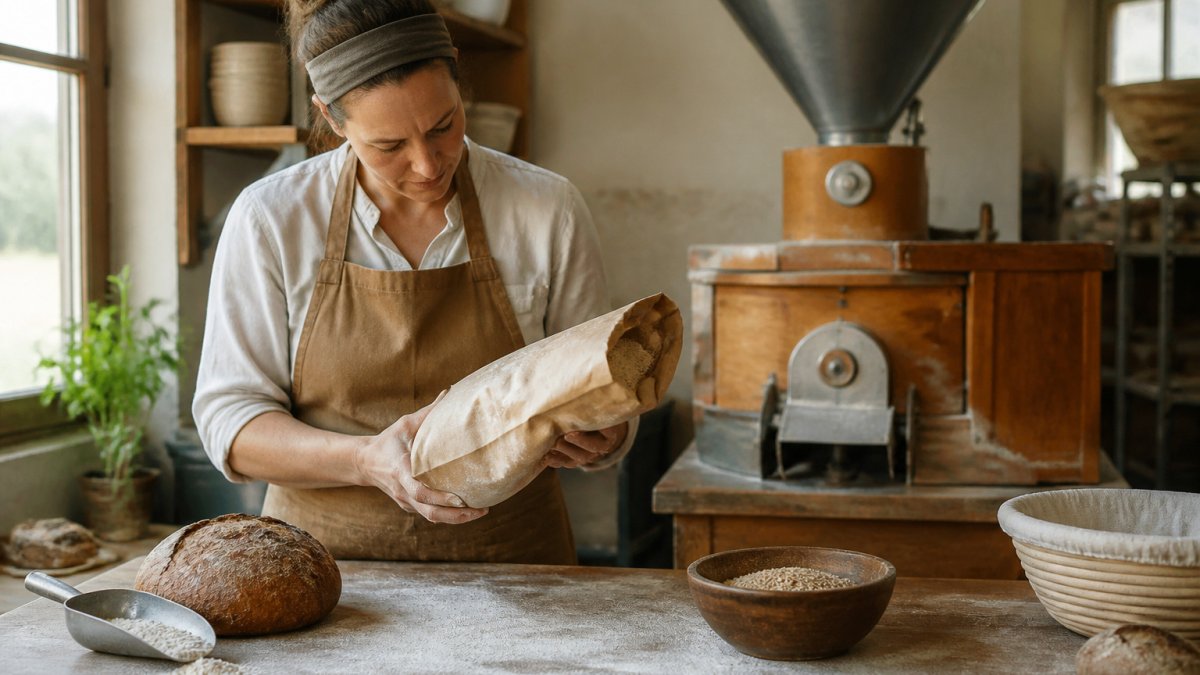
Baker in an apron inspecting a bag of freshly stone-ground flour on a wooden workbench in a bakery kitchen
For bakers who want a reliable backup, online specialty sellers offer consistent stock year-round. Specialty Food Source is one option, and warehouse pickup is available in Brockton, MA.
Step-by-Step: Vetting a Heirloom Flour Supplier
Use this sequence to evaluate any supplier before you commit to a standing order.
Confirm the variety. Ask for the exact grain name, such as "Bronze Chief" or "einkorn," rather than a general heirloom label.
Ask about milling dates. Fresher is better. Flour milled within weeks of shipping performs more predictably.
Request a sample. Bake a small test batch before buying in bulk.
Check packaging. Sealed, food-grade bags protect against moisture and pests.
Verify delivery reliability. Confirm lead times and how the supplier handles damaged shipments.
Many small bakers ask whether a supplier will work with small volumes.
Questions to Ask Before You Order
What is the milling date, and how long is the flour's expected shelf life?
Is the grain grown in a specific region, and can you trace its origin?
What is the return or replacement policy if a bag arrives damaged or off-spec?
Do you offer references from other bakeries or restaurants in the area?
Use these steps to check any supplier before committing to a standing order.
Step
What to do
Timing
Confirm the variety
Ask for the exact grain name, such as "Bronze Chief" or "einkorn"
Before ordering
Ask about milling dates
Fresher flour performs more predictably
Within weeks of shipping
Request a sample
Bake a small test batch before buying in bulk
Before bulk purchase
Check packaging
Sealed, food-grade bags protect against moisture and pests
Use it as a baseline, then blend in heirloom flour in small proportions to build flavor without losing rise.
How to Store Heirloom Flour So It Stays Fresh
Whole-grain and heirloom flours contain oils in the germ that oxidize over time, so storage matters more than with refined white flour. Keep flour in airtight containers in a cool, dry place away from heat and sunlight. For long-term storage, refrigerate or freeze it, and bring it to room temperature before baking so it hydrates evenly. Label each container with the milling date so you can rotate stock and use the oldest bags first.
Watch out: storing flour in its original paper or thin plastic bag invites moisture and pantry pests. Transfer it to a sealed container as soon as it arrives.
Placing Your First Heirloom Grain Order
When you are ready to place a first order, start small with one or two varieties so you can test performance in your own recipes. Browse the full selection and add the flour you are considering to your cart. Specialty Food Source offers bundle discounts on mix-and-match items. For questions about a specific order, email support@specialtyfoodsource.com or text (508) 941-8992.
Frequently Asked Questions
What is the difference between heirloom and modern wheat flour?
Heirloom wheat varieties are older strains that were grown before modern breeding focused on high yield and uniform performance. Many heirloom flours have a more varied flavor and different protein profiles, which can change how dough handles and how bread tastes. Modern wheat is bred for consistency and volume, so it often gives more predictable results in high-volume production. For a bakery, the choice depends on whether flavor character or repeatable performance matters more for a given product.
How do I find local heirloom grain suppliers in Massachusetts?
Start by searching for regional stone mills and farm-based grain programs, which often sell heirloom flour in bags ranging from small retail sizes to 50-pound sacks. Ask whether the mill names the wheat variety and the harvest year, and whether it mills to order or from stock. Specialty Food Source carries heirloom and ancient grains such as einkorn and spelt, which you can compare alongside local options. Support is available at support@specialtyfoodsource.com or by texting (508) 941-8992.
Should I buy whole grain berries or pre-milled heirloom flour?
Whole grain berries keep their oils and nutrients longer and let you mill fresh flour when you need it, which many bakers prefer for flavor. Pre-milled flour is faster to use and requires no equipment, but it begins losing freshness soon after milling. If you have a small mill or a grinder, buy berries and mill in small batches. If you bake in volume and need consistent results without extra steps, pre-milled flour bought in quantities you can use quickly is the practical choice.
How do I store heirloom flour to maintain freshness?
Keep flour in an airtight container in a cool, dry place away from heat and light. Whole grain flours contain natural oils that can turn rancid, so they keep best when refrigerated or frozen, especially in warm kitchens. Label each container with the milling date and use older stock first. Storing berries whole, in sealed food-grade buckets or bags, extends shelf life further than storing milled flour.
What certifications should I look for when sourcing heirloom grains?
Look for clear labeling of organic status, non-GMO verification, and gluten-free certification if relevant to your products. Ask the supplier for the variety name, the origin of the grain, and the milling method, since these details affect flavor and quality. Certifications confirm farming practices, but they do not guarantee freshness, so also ask about milling dates and storage conditions. Keep records of supplier documentation for your own food safety and labeling needs.
What minimum order size should a small bakery expect?
Minimums vary by supplier. Some mills sell retail bags of a few pounds, while wholesale programs may start at 25 or 50 pounds per variety. Small bakeries often do best with a standing order for a few core flours and occasional specialty purchases. Ask suppliers directly about minimums, delivery frequency, and whether they can split a bulk order across multiple shipments to keep ingredients fresh.
How long does heirloom flour last compared with standard all-purpose flour?
Refined all-purpose flour has a long shelf life because the bran and germ are removed, while heirloom whole grain flour retains oils that can go rancid within weeks at room temperature. Freezing whole grain flour can extend its usable life to several months. Check the milling date, store flour properly, and smell it before use, since a sharp or paint-like odor signals rancidity.
Sourcing heirloom grain flour well comes down to knowing the variety, the milling date, and the supplier's track record. Use the vetting steps above on every new source, and you will get more consistent results in the oven.