Holiday baking season is here · Free local delivery on $250+ in MA & $500+ in RI, NH & ME · Warehouse pickup in Brockton · Shipping chocolate? Add insulated shipping.
Holiday baking season is here · Free local delivery $250+ MA · $500+ RI, NH & ME · Pickup in Brockton
Choosing a reliable specialty food vendor starts with a written checklist you score every candidate against, covering product quality, freshness, food safety, reliability, pricing, selection, and service. A vendor that scores 4 or better on all seven criteria earns a trial order, and you should confirm delivery coverage, minimums, and cutoff times in writing before committing.
Score each vendor 1 to 5 on seven criteria and add the totals.
Ask for references, confirm time in business, and request a sample before signing.
Run a two-minute inspection of temperature, packaging, and pack dates on every arrival.
Keep a second approved source for your three most critical items.
Compare vendors on landed cost, not case price, using your real weekly volume.
Ready to test a specialty food vendor?Browse 5,000+ professional-grade ingredients with local delivery, pickup, and nationwide shipping.
Choosing a reliable specialty food vendor starts with one document: a written checklist you score every candidate against. Too many kitchens pick a supplier on a single good sample box, then spend months fixing late deliveries and inconsistent product. A checklist fixes that. It turns a gut call into a repeatable process you can defend to your chef, your partners, and your accountant.
The Seven Criteria That Decide the Shortlist
Score each vendor 1 to 5 on these, then add the totals:
Product quality: Does the chocolate, flour, or spice match the spec every time?
Freshness: Are you getting current stock with real shelf life left?
Food safety: Can they show an approved supplier process and documentation?
Reliability: Do deliveries land on the promised day, undamaged?
Pricing: Is the total cost clear, with no hidden fees?
Selection: Can they cover your specialty items, not just the basics?
Service: Do you get a named rep who answers questions?
A vendor that scores 4 or better on all seven earns a trial order. Anything below that stays on the bench.
How to Evaluate a Food Supplier Before You Commit
Evaluation means testing a food supplier against your checklist with real evidence, not a sales pitch. Ask for references from businesses like yours, confirm their time in business, and request a sample before you sign anything.
When you evaluate a sample, trust your palate, but do not let a label do all the work. Check the ingredient statement, the pack date, and the storage conditions behind it.
Distribution Models and What Each One Costs You in Practice
Distribution model shapes your real cost more than the case price does. Here is how the common options compare:
Model
Best For
Trade-Off
Broadline food service distributor
One-stop pantry basics
Limited specialty depth
Specialty wholesale food supplier
Couverture, heirloom flour, niche spices
Smaller minimums, narrower catalog
Local warehouse pickup
Tight schedules, high volume
You handle transport
Online marketplace
Hard-to-find single items
Less control over freshness
Shipping reliability is the variable that sinks most plans. If you are weighing how culinary ingredient distributors handle delivery, reliable shipping for culinary ingredient distributors explains what to check before you commit.
Questions to Ask a Wholesale Food Supplier
The right questions to ask a wholesale food supplier expose problems before they cost you a week of production. Ask them in writing and keep the answers.
What is your minimum order, and does it change by category?
What is the order cutoff for next-day delivery?
Which zip codes fall inside your delivery coverage?
Are delivery fees built into the case price or added at checkout?
How do you handle a damaged or wrong item?
Can you supply single-origin couverture or heirloom grain flour?
Who is my rep, and how fast do they respond?
That last question matters more than buyers expect. One named rep with authority to fix a problem beats a general support line every time. At Specialty Food Source, wholesale accounts get a dedicated contact and standing weekly orders, which removes the guesswork from reordering.
Food Delivery Quality Checks for Every Arrival
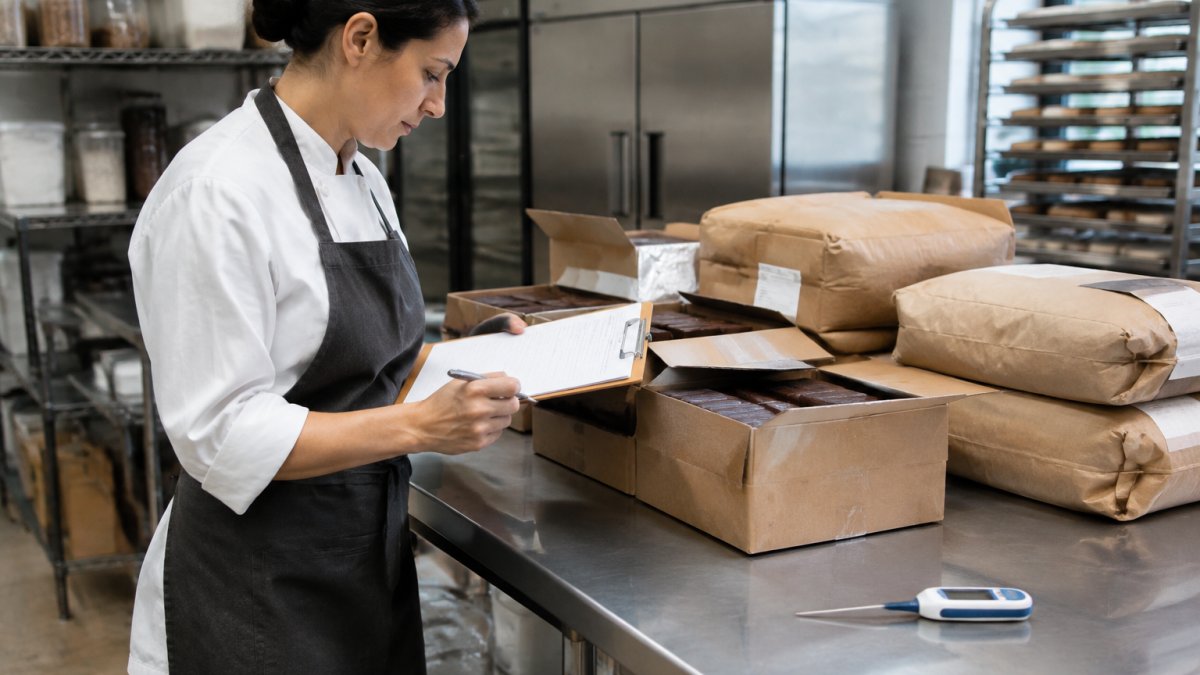
Every arrival needs a two-minute inspection before anything hits the shelf. Check temperature, packaging, and pack dates the moment the truck leaves.
Process flowchart for a specialty food vendor verifying ingredient delivery quality upon arrival
Run this food delivery quality check on each order:
Confirm the count against the invoice
Look for crushed corners, tears, or melted edges
Check the pack date and remaining shelf life
Verify chocolate is cool and unbloomed
Photograph any damage before you sign
Log the arrival date and lot number
Chocolate is the item most likely to arrive compromised. It is heat sensitive, so a summer delivery that sits on a dock too long can bloom and separate.
Watch out: signing for a delivery before you inspect it removes your use on a damage claim. Open the boxes first.
Specialty-Food Category Fit and Sourcing Depth
Category fit decides whether a supplier is worth keeping.
Use this framework to score category fit before you commit:
Imported ingredients: Ask which countries of origin they stock, who their importer of record is, and whether they hold customs and import documentation on file. A vendor that cannot name the importer is a reseller, not a sourcing partner.
Artisan and small-batch products: Ask about batch consistency, production cadence, and whether the same producer supplies the item month to month. Small-batch items rotate; confirm the vendor tells you when a producer changes.
Dietary-specific foods: For gluten-free, kosher, halal, vegan, or allergen-controlled items, ask about dedicated storage, dedicated packing lines, and allergen cross-contact controls. A vendor that stores gluten-free flour next to wheat flour in the same open bin is a liability.
Culturally specific products: Ask whether the vendor carries the specific regional brands and formats your menu or customers expect, not just a generic substitute. Substituting a different country's version of the same product name is a common failure.
A practical test: give the vendor a short list of five items that are core to your business and ask them to confirm stock, origin, and lead time in writing. A vendor with real category depth answers in hours. A generalist answers with a catalog link.
Specialty Food Source offers a catalog of over 5,000 in-stock professional-grade items, including couverture chocolate, specialty flours, unique spices, and pantry essentials.
One distinction buyers miss: couverture is pure chocolate, the right choice for truffles, filled chocolates, and high-end bars.
Watch out: a vendor that lists a specialty item but cannot confirm origin, lot, or lead time may leave you with less control over freshness and traceability.
Traceability, Recalls, and Contingency Planning
Traceability is the ability to trace an ingredient back to its lot and supplier, and it is your first line of defense when a recall lands. A serious vendor keeps lot records and can tell you exactly which delivery a problem batch came from.
Treat traceability as part of vendor evaluation, not an afterthought.
Build a backup plan too:
Keep a second approved source for your three most critical items
Store lot numbers on every receiving log
Know your vendor's recall notification process
Hold a small buffer of shelf-stable staples
A single-source kitchen is one bad batch away from a closed week.
Run a Side-by-Side Specialty Food Vendor Comparison
A side-by-side comparison turns opinions into a decision. Pull your top three candidates into one scorecard and let the numbers argue. Most guides stop at "compare quality and price." That is not a comparison; it is a vibe check. A decision-grade comparison has three layers: the quality scorecard, the landed-cost math, and the service-level and eligibility check.
Layer 1: The Weighted Quality Scorecard
Use the same seven criteria from your checklist, score each vendor 1 to 5, and weight the categories that matter most to your operation. A chocolatier should weight quality and freshness heavily. A high-volume cafe should weight delivery reliability and pricing. Add the weighted totals and pick the highest score that clears your minimum on food safety.
Layer 2: Landed Cost, Not Case Price
Case price is the number vendors want you to compare. Landed cost is the number that decides your margin. Build a landed-cost line for each vendor on a representative order:
Case price for the same spec item
Delivery fee, fuel surcharge, or route fee
Minimum order shortfall you have to absorb to hit the threshold
Breakage and short-ship allowance you expect from their packing
Labor hours your team spends receiving, inspecting, and resolving issues
A vendor with a lower case price and a delivery fee can lose to a vendor with a higher case price and free local delivery on qualifying orders. Run the math on your actual weekly volume, not a single case.
Layer 3: Delivery Service Levels and Eligibility
Delivery economics and purchasing eligibility are where most comparisons fall apart. Confirm these in writing for each vendor:
Order cutoff time for next-day delivery, and whether it changes by category
Delivery windows and whether you get a window or an all-day range
Route frequency to your zip code, and whether it drops on your busiest prep day
Delivery coverage for your specific address, not just your state
Account requirements: business license, resale certificate, or tax ID
Minimum order quantities by category, and whether they reset weekly or per order
Whether the vendor sells to individuals or only to licensed businesses
This is also where you test small-business eligibility. A six-person bakery buying 25 pounds of specialty flour does not need a vendor built only for pallet orders. Confirm minimums and cutoff times fit your actual volume before you commit.
The Brockton-Area Layer
For a Brockton kitchen, warehouse pickup in Brockton, MA lets you control the timeline and skip the shipping wait.
Watch out: comparing vendors on case price alone routinely hides delivery fees, minimum-order shortfalls, and receiving labor, which can flip the ranking once you run the landed-cost math on your real weekly volume.
Set Up Your First Order With Specialty Food Source
Specialty Food Source has been independently owned since 1991 and is a JN KIDDS Distributors company.
Here is how a first order typically works:
Tell us your categories and volume
Confirm delivery, pickup, or nationwide shipping
Place a trial order sized to your real usage
Inspect on arrival and log the lot numbers
Set a standing weekly order once it clears
Pricing depends on quantity, delivery distance, and order size, so ask for a current quote rather than guessing from a list.
The real test of a specialty food vendor is not the first delivery.
Frequently Asked Questions
What is the most important factor in choosing a reliable specialty food vendor?
Consistency across three things: product quality, stock availability, and delivery reliability. A vendor that carries excellent couverture but ships late or substitutes without asking will cost you more in rework than a slightly higher-priced supplier that delivers on schedule. Build your shortlist around vendors that can show documented food-safety practices, an approved supplier program, and references from businesses your size. Then test them with a small first order before committing volume.
Can small bakeries and home cooks buy from wholesale food suppliers?
Many wholesale food suppliers sell to small businesses and serious home cooks, but eligibility and minimum order rules vary widely. Ask directly about minimum order quantities, whether a business license or resale certificate is required, and whether pickup is available if delivery minimums are out of reach. Specialty Food Source sells to restaurants, bakeries, and serious home kitchens, with warehouse pickup in Brockton, MA, local delivery across MA, RI, NH, and ME, and nationwide shipping on eligible items.
What questions should you ask a wholesale food supplier before ordering?
Ask about stock availability and how often it changes, order cutoff times and delivery windows, minimum order quantities, and what happens when an item is out of stock. Confirm shelf-life guarantees, how heat-sensitive items ship, and whether frozen products are local-only. Ask for two or three references from similar businesses and for the name of your dedicated account rep. Finally, ask how substitutions and short shipments are handled so there are no surprises on invoice day.
How can you verify the quality and consistency of specialty ingredients?
Check the ingredient statement and country of origin on arrival, compare lot-to-lot appearance and aroma against your standard, and keep a simple receiving log. Ask whether the supplier operates an approved supplier program and what third-party certifications or supplier audits back it up. For chocolate, confirm it ships in an insulated cold box by UPS 2nd Day Air when the delivery forecast is over 75°F. Request a shelf-life guarantee of at least six months and ask that the freshest stock available be sent.