Holiday baking season is here · Free local delivery on $250+ in MA & $500+ in RI, NH & ME · Warehouse pickup in Brockton · Shipping chocolate? Add insulated shipping.
Holiday baking season is here · Free local delivery $250+ MA · $500+ RI, NH & ME · Pickup in Brockton
Bakery ingredient ordering in 2026 works best as a margin decision built on a standing order sheet with par levels, pack sizes, lead times, and reorder triggers in one place. Set each par level as average daily usage times supplier lead time plus safety stock, then review monthly and after any week that ran short or left excess.
Every order sheet line needs four fields: item, unit, par level, and supplier lead time.
Set safety stock at roughly one to three days for dry goods and closer to one day for perishables.
A Brockton bakery using 40 lb of bread flour daily with a two-day lead time carries a 160 lb par level.
Label every delivery with the date received and rotate oldest stock to the front.
Compare suppliers on unit price, minimum order, delivery fees, lead time, quality, and payment terms.
Ready to simplify bakery ingredient ordering?Specialty Food Source stocks 5,000+ professional-grade ingredients with local delivery, pickup, and wholesale support.
Why 2026 Is the Year to Rethink Bakery Ingredient Ordering
The American Bakers Association's 2026 Consumer Trends research found that 94% of consumers purchase bread products, and 55% eat sandwich bread at least once a week. Steady demand, in other words. Yet the same year brought a 5.8% decline in total bakery and tortilla manufacturing sales and a 7.3% drop in volume, according to Farm Credit Canada's 2026 Food and Beverage Report.
That is the throughline of this guide from Specialty Food Source: in 2026, bakery ingredient ordering is a margin decision before it is a purchasing task. Get the order sheet, par levels, and storage right and the rest of the business gets easier.
Building a Bakery Ingredient Ordering Checklist
A bakery ingredient ordering checklist is a standing list of every item you buy, with its par level, pack size, lead time, and reorder trigger in one place. It turns a weekly scramble into a repeatable process that anyone on staff can run.
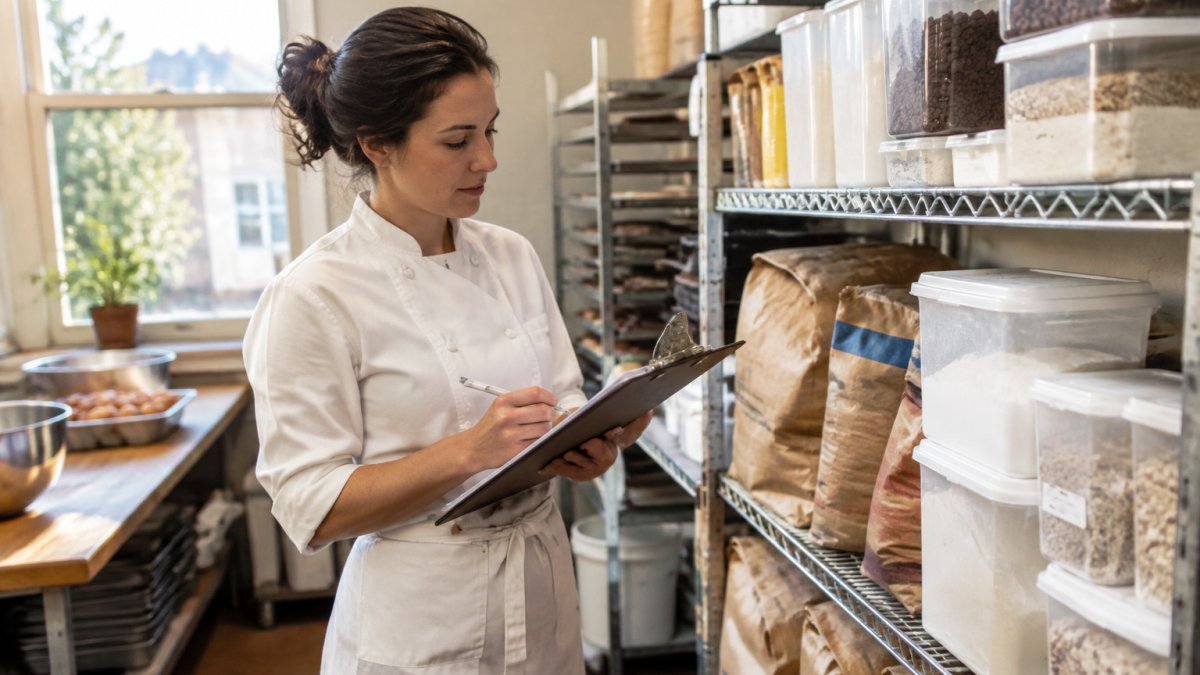
Baker checking inventory on a clipboard in a sunlit kitchen with shelves of flour and containers
What Belongs on the Weekly Order Sheet
Every line on the sheet needs four fields: item, unit, par level, and supplier lead time. Group items by category so you can spot gaps fast:
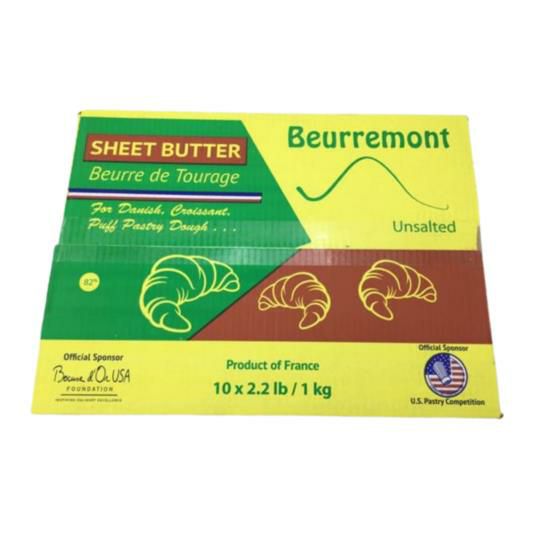
Fats, including a bulk butter sheet for laminated doughs and pastries
Dairy powders, eggs, and frozen components
Chocolate and cocoa, including couverture and compound
Sugars, spices, purees, and finishes
The Numbered Ordering Workflow
Count what is on the shelf and in the freezer.
Compare each count to its par level.
Flag anything at or below the reorder point.
Check the production calendar for the next two weeks.
Adjust quantities for planned batches and advance orders.
Confirm lead times with each supplier.
Submit the order and log the date.
Receive, inspect, and date-code everything on arrival.
How to Set Bakery Ingredient Par Levels That Actually Work
A par level is the minimum quantity of an ingredient you keep on hand before reordering. Set it by working backward from usage, not by eyeballing the shelf.
BUTTER SHEET - BEURREMONT
The working formula is: par level = (average daily usage × supplier lead time in days) + safety stock.
Here is a worked example. Suppose a Brockton bakery uses 40 lb of bread flour per day and the supplier's lead time is two days.
Apply the same math to every line, but adjust the buffer by category:
Dry goods (flour, sugar, cocoa): two to three days of safety stock is usually workable because shelf life is long and deliveries are predictable.
Dairy, eggs, and frozen components: keep safety stock closer to one day and order more often, since spoilage and freezer space are real constraints.
Specialty items with weekly delivery: safety stock must cover the full gap between deliveries, not just the lead time.
Seasonal items: raise par levels ahead of holidays and lower them in slow weeks rather than holding a fixed number year-round.
Review par levels monthly and after any week that ran short or left you with excess. A par level is a living number, not a one-time calculation.
A common mistake is counting only ingredient costs when setting these numbers.
Bakery Ingredient Shelf Life and Storage After Delivery
Storage decisions start before the truck arrives. Chocolate is heat sensitive, so if the delivery forecast is over 75°F, it ships in an insulated cold box by UPS 2nd Day Air. Plan a cool, dry receiving spot for anything temperature-sensitive.
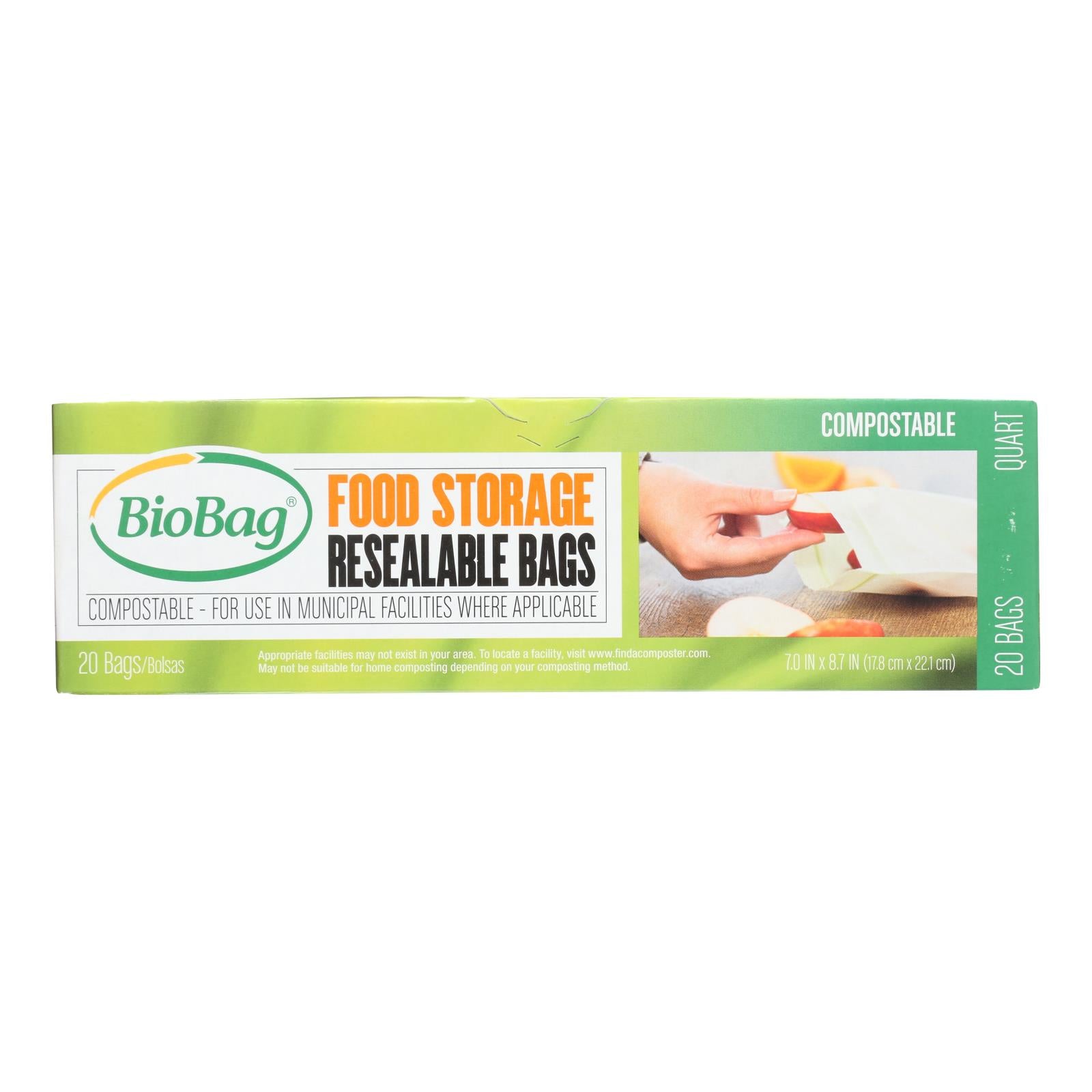
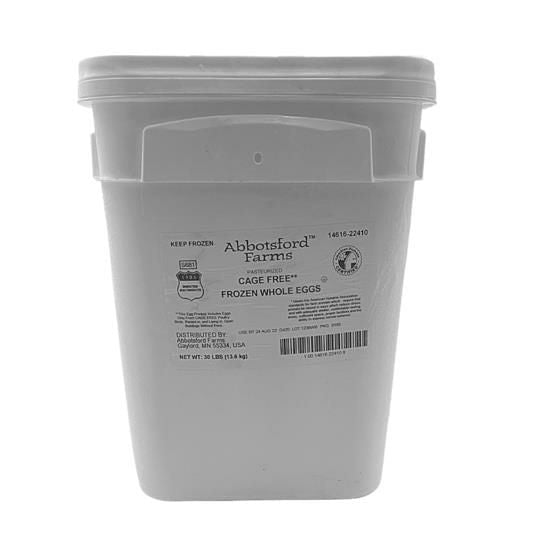
Label every delivery with the date received and rotate oldest stock to the front. Keep flours and dry goods sealed in a cool, dry place; clumping in milk powder and flour usually means moisture got in. For portioning and keeping open ingredients fresh, resealable compostable food storage bags make the rotation easy to see. If you want a frozen whole egg option that holds well in storage, frozen whole eggs are worth checking.
BioBag Resealable Food Storage Bags, 20 ct (Case of 12)
Abbotsford Farms Frozen Whole Eggs – 30 lb Pail
Small Bakery Production Planning Around Order Cycles
Production planning is the practice of scheduling batches backward from collection and delivery times so ingredients arrive and get used in the right order.
Build a weekly production calendar that lists each bake, its ingredient draw, and its oven slot. Then match your order cycle to it: order what the calendar needs, not what the shelf looks like. A ready-to-use component like croissant dough sheets helps a small bakery match output to demand without stretching capacity during a busy week.
Choosing Wholesale Ingredient Suppliers in the Brockton Area
A wholesale supplier is a business that sells ingredients in bulk at trade-oriented pricing, usually with delivery, pickup, or standing orders. For a small bakery near me in the Brockton area, the right supplier shortens lead times and reduces the number of invoices you reconcile.
Specialty Food Source, the online shop of JN Kidds, is a wholesale specialty food distributor in Brockton, Massachusetts, serving restaurants, bakeries, caterers, and home cooks. We stock over 5,000 items, offer free local delivery on qualifying orders across MA, RI, NH, and ME, and provide warehouse pickup in Brockton. For questions, reach us at support@specialtyfoodsource.com or text (508) 941-8992.
How to Compare Suppliers Before You Commit
Evaluate every supplier on the same six criteria so the comparison is apples to apples:
Unit price: compare the price per pound or per ounce, not the pack price, since pack sizes differ.
Minimum order: a low minimum matters more to a small bakery than a slightly lower unit price on a large order.
Delivery fees and coverage: confirm whether delivery to your Brockton address is included, how often routes run, and whether there is a fuel or small-order surcharge.
Lead time and reliability: ask for the standard lead time and how late deliveries are handled.
Quality and consistency: request a sample or a small trial order before committing to a standing order.
Payment terms: net terms, card fees, and invoicing cadence all affect cash flow.
Questions to Ask Before You Commit to a Supplier
What is your standard lead time, and how do you handle a late delivery?
Do you have order minimums for a small bakery buying a single 25 lb bag?
How are temperature-sensitive items packed and shipped?
Can you set up a standing weekly order with one rep and one invoice?
What is your process if an item arrives damaged or wrong?
Can you source specific items, such as single-origin couverture or heirloom flours?
Local Sourcing Options in the Brockton Area
A Brockton bakery typically draws from three channels: a broadline distributor with delivery routes, a cash-and-carry or warehouse pickup option, and specialty online suppliers for items the local market does not stock. Many small bakers use a primary supplier for staples and a secondary supplier for specialty items, which keeps lead times short without forcing every order through one vendor. Confirm delivery coverage for your specific zip code before you build a standing order around a supplier.
Tracking 2026 Ingredient Prices and Forecasting Your Budget
Ingredient price tracking is the habit of logging what you pay per unit each order so you can spot a trend before it hits your margin. Track those categories separately so a cocoa dip is not masked by a dairy rise.
Cost Category
2026 Outlook
What to Track
Budget Action
Flour, sugar, cocoa
Expected relief
Price per lb each order
Lock in bulk buys
Dairy and margarine
Variable
Weekly unit cost
Keep buffer in par levels
Chocolate
Heat-sensitive
Shipping method and season
Order ahead in warm months
Specialty items
Supplier-dependent
Lead time and stock
Build substitution list
Keep a simple contingency plan: for each critical ingredient, name one acceptable substitute and one backup supplier. When a delivery slips, you swap instead of stopping production.
Start Your Next Ingredient Order with Specialty Food Source
Ordering well is a discipline, not a talent. The bakeries that win in 2026 will be the ones with a clean order sheet, honest par levels, a storage plan, and a supplier who answers when something goes wrong.
At Specialty Food Source, we built our business around exactly that. We have been independently owned since 1991 and are a JN Kidds Distributors company, with a 4.58 average rating from 314 verified reviews.
Get started with Specialty Food Source and build an ordering rhythm your kitchen can run without you.
The challenge is not finding ingredients. It is building a repeatable system that keeps quality high and costs predictable week after week.
Frequently Asked Questions
How often should a small bakery reorder ingredients?
Most small bakeries reorder on a fixed weekly cycle and place a second midweek order for perishables that sell fastest. The schedule should follow your production calendar rather than habit: count stock on the same day each week, compare it to your par levels, and order only what brings you back to par. Ingredients with short shelf life, such as fresh dairy and frozen purees, need tighter review than flour or cocoa. A written bakery ingredient ordering checklist keeps the cycle consistent when staff rotate.
What are bakery ingredient par levels and how do I calculate them?
Par levels are the minimum quantity of an ingredient you want on hand when the next delivery arrives. Calculate them from usage, not guesswork: multiply average weekly usage by your delivery lead time in weeks, then add a safety buffer for busy periods. Bakery ingredient par levels should be reviewed quarterly, and any time a product menu changes. Flour, sugar, and cocoa usually carry a larger buffer than perishables, which should stay close to actual weekly demand.
How can a bakery avoid overordering perishable ingredients?
Order perishables against confirmed orders and your production calendar, not against shelf space. Batch production by oven capacity and plan backwards from collection times so you know exactly how much cream, fruit, or frozen puree each week consumes. Keep a visible use-by date on every container and rotate oldest stock to the front. When a slow week is coming, cut the perishable order first and hold the dry goods, which carry far longer shelf life and storage tolerance.
How should a small bakery forecast ingredient needs for 2026?
Start with last year's sales by week, then adjust for known changes: new menu items, added wholesale accounts, and seasonal peaks. Ingredient costs can shift from year to year, so revisit your budget rather than locking in last year's numbers. Build the forecast into small bakery production planning so purchasing, staffing, and oven time move together instead of in separate spreadsheets.
How can I compare ingredient suppliers and delivery options?
Compare on four points: lead time, minimum order, delivery reliability, and whether the supplier stocks the specific items you use every week. Ask for references from bakeries your size and request a trial order before committing to a standing schedule. Consolidating items with one supplier usually lowers shipping cost and simplifies invoicing. Specialty Food Source offers warehouse pickup in Brockton, free local delivery on qualifying orders across Eastern Massachusetts and New England, and nationwide shipping, so you can test a small order first.
Does the 4 day cake rule apply to bakery ingredient ordering?
The 4 day cake rule is a freshness guideline for finished cakes, not a purchasing rule. It does matter for ordering, though: if decorated cakes are expected to sell within a few days, your perishable orders should match that turnover rather than sitting in storage. Track how quickly each finished item sells, then set perishable par levels to that pace. Dry ingredients and couverture hold far longer, so they can be bought in larger quantities without the same risk.