Holiday baking season is here · Free local delivery on $250+ in MA & $500+ in RI, NH & ME · Warehouse pickup in Brockton · Shipping chocolate? Add insulated shipping.
Holiday baking season is here · Free local delivery $250+ MA · $500+ RI, NH & ME · Pickup in Brockton
To calculate shipping costs for ingredients, build a landed cost: add purchase price, base freight, the carrier's weekly fuel surcharge, handling fees, packaging, and applicable taxes, then divide by usable yield. Quote temperature-sensitive items separately, use the larger of actual or dimensional weight, and allocate freight by weight share.
Carriers charge whichever is higher: actual package weight or dimensional weight.
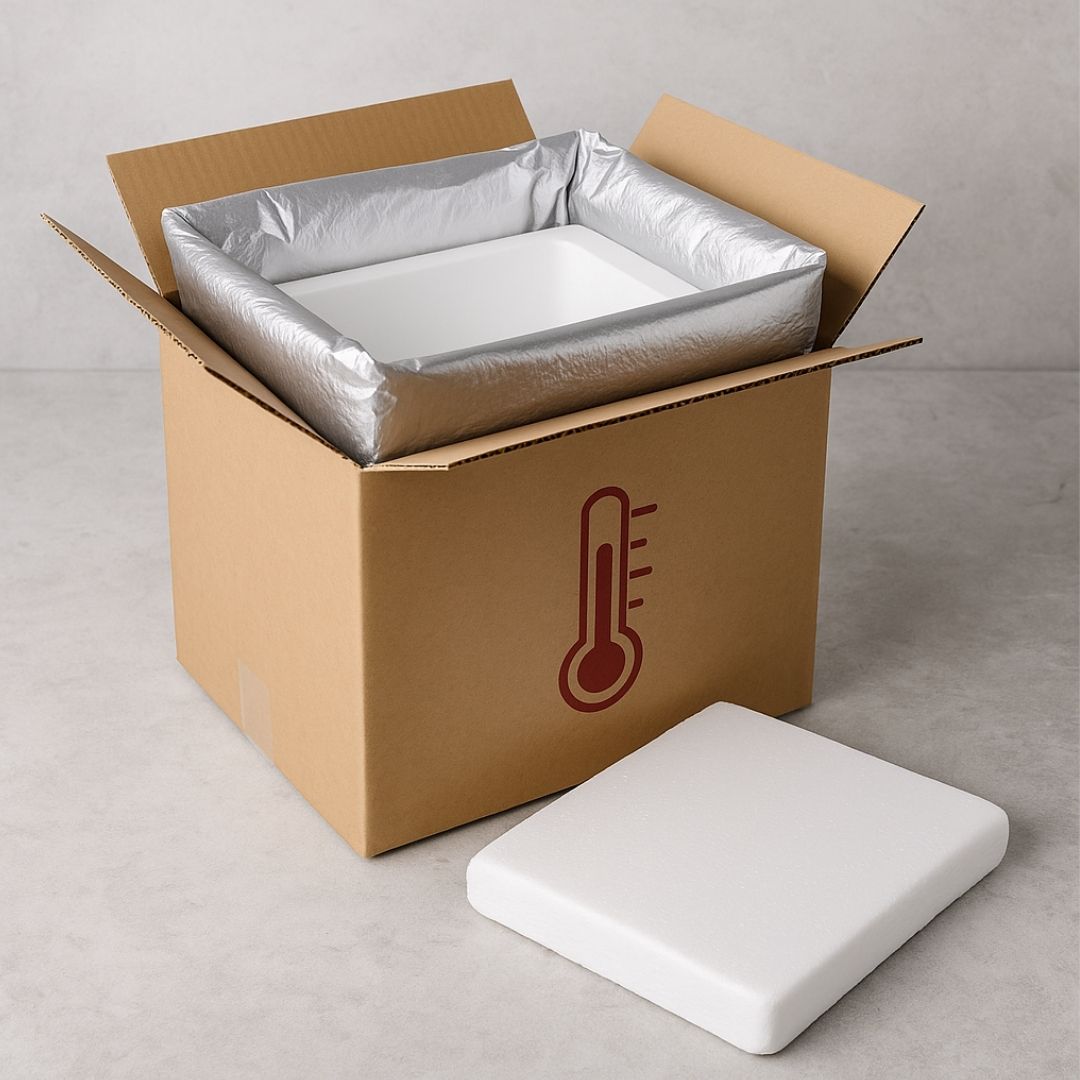
Chocolate ships in an insulated cold box by UPS 2nd Day Air when the forecast is over 75°F.
An insulated kit with liner and ice packs holds up to 50 lb in the same box.
Ask whether a quoted freight rate is all-in or base-only before finalizing your cost sheet.
Split shared freight by each ingredient's share of billable weight.
Not sure what freight will add to your order?Specialty Food Source ships professional ingredients nationwide with local delivery and Brockton pickup.
Shipping costs for ingredients are the line item most kitchens forget to count. That gap quietly eats into margins on every order. If you buy a case of couverture and never add the freight to your cost sheet, your menu price is built on a number that does not exist.
Temperature-sensitive ingredients often need cold packaging, and freight can change the true cost of an order.
Ingredient cost is the total you pay to get a usable ingredient into your kitchen, not just the sticker price on the case. Freight, packaging, and delivery speed all belong in that figure.
Three things make ingredient shipping different from ordinary parcel shipping:
Chocolate and dairy need cold packaging and faster service.
Heavy cases of flour and oil push up package weight fast.
A late delivery can spoil a production day, not just a shipment.
Below, we show you exactly how to build freight into your cost sheet, step by step.
The Variables That Move an Ingredient Shipping Quote
A shipping quote is not one number. It is several factors multiplied together.
Package weight is the actual scale weight of the box. Package dimensions are its length, width, and height. Dimensional weight is a billing figure carriers calculate from size, and they charge whichever is higher: actual weight or dimensional weight. A light but bulky box of pastry shells can cost more than a dense box of the same weight.
Package weight, dimensions, and dimensional weight
Measure every case before you assume a rate. Then compare scale weight against the carrier's dimensional formula. Whichever figure is larger is the one you pay for.
Destination, shipping zone, and carrier
Shipping zone is the distance band between origin and destination. A closer zone costs less. Carrier choice matters too: ground service is cheaper and slower, while air service costs more and protects perishables.
For temperature-sensitive items, chocolate is heat sensitive; when the delivery forecast is over 75°F, it ships in an insulated cold box by UPS 2nd Day Air.
Insulated Shipping Kit – liner and ice packs (holds up to 50 lb of chocolate). Ships in the same box as your chocolate. For warm regions, 2nd Day Air or faster is recommended; Ground to warm areas ships at customer's risk.
How to Calculate Landed Cost of Ingredients
Landed cost is the full price of an ingredient once it reaches your door. It includes purchase price, freight, packaging, and any handling fee. Use this formula:
Then divide by usable yield to get your true cost per usable unit. If a case of flour loses weight to spillage or trim, your real cost per pound rises.
Fuel surcharges and handling fees are often the two line items that quietly inflate a landed cost. Carriers publish fuel surcharges as a percentage of the base rate, and they change weekly. A common pattern is for a supplier to quote a freight number that excludes the fuel surcharge, so the invoice lands higher than the quote. Always ask whether a quoted rate is all-in or base-only.
Run the numbers in this order:
Write down the full order price for each ingredient.
Add the base freight from your quote.
Add the fuel surcharge percentage the carrier applies that week.
Add any handling or liftgate fee the supplier charges.
Add packaging cost, such as a cold box, liner, or ice packs.
Add applicable state and local sales tax on the goods and, where relevant, on freight.
Subtract any unusable portion to find usable yield.
Divide total cost by usable units to get cost per unit.
Watch out: some suppliers bill freight as a separate invoice after delivery, so the order confirmation does not show the true landed cost. Reconcile the freight invoice against your quote before you finalize your cost sheet.
Buying from a warehouse can cut freight and handling. Our guide on buying ingredients from warehouses explains how that changes your landed cost.
Here is the order of operations for building a landed cost, from the order price down to cost per usable unit.
Step
What to do
1
Write down the full order price for each ingredient
2
Add the base freight from your quote
3
Add the carrier's fuel surcharge percentage for that week
4
Add any handling or liftgate fee the supplier charges
5
Add packaging cost, such as cold box, liner, or ice packs
6
Add applicable state and local sales tax
7
Subtract any unusable portion to find usable yield
8
Divide total cost by usable units to get cost per unit
Working Through a Brockton Order Step by Step
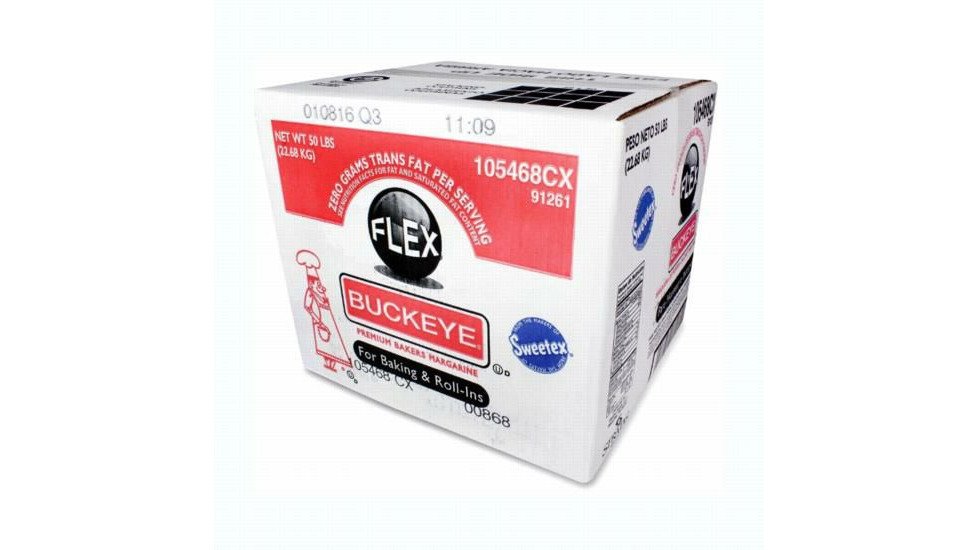
Here is how a Brockton bakery would price one order. A pastry shop orders an 11 lb block of Callebaut 70-30-38 dark chocolate and a 50 lb box of Buckeye Roll margarine. The chocolate ships insulated; the margarine ships overnight in a liner with ice packs on Tuesdays and Wednesdays.
MARGARINE BUCKEYE ROLL
The steps:
MARGARINE BUCKEYE ROLL
Get the full order price for both items.
Weigh and measure each case to find package weight and dimensions.
Check dimensional weight against actual weight and use the larger.
Confirm the zone from Brockton to the delivery address. A shipment to Boston stays in a local zone; a shipment to Chicago crosses several zones and costs more per pound.
Compare carriers for ground versus 2nd Day Air on the chocolate. Ground is cheaper but slower; 2nd Day Air protects the chocolate in warm weather.
Add the insulated kit to the chocolate shipment. The liner and ice packs add weight and cost, so include them in the package weight before you re-quote.
Total the freight and divide by usable pounds of each ingredient.
The chocolate and margarine carry different shipping needs, so quote them separately. Then combine the freight into one landed-cost figure for the order.
Allocating one shipment's freight across multiple ingredients is where most cost sheets go wrong. If the chocolate and margarine ship in the same box, split the total freight by each ingredient's share of the billable weight. If they ship separately, assign each freight charge to its own ingredient. A common pattern is to allocate by weight share, because weight drives most carrier rates.
Ordering more at once spreads freight across more pounds, which is one of the simplest ways to lower your cost per pound.
When an Ingredient Shipping Cost Calculator Helps
An ingredient shipping cost calculator is a tool that estimates freight from package weight, dimensions, zone, and service level. It gives you a fast estimate before you commit to an order.
Use a calculator when you need a quick estimate. Skip it when the order is complex. Mixed temperature zones, multiple carriers, and cold packaging are easier to price by hand or with a rep.
Recipe cost is the sum of every ingredient's cost in a dish. To calculate food cost for a recipe, price each ingredient by the amount used, then add them together.
The process:
List each ingredient and the quantity used.
Convert the quantity to the same unit you bought in.
Divide your landed cost by usable units to get cost per unit.
Multiply cost per unit by the quantity used.
Add all ingredient costs for the recipe total.
Unit conversion trips up most kitchens. If you buy flour by the pound but a recipe lists cups, convert to one unit first. Weight conversion is more accurate than volume conversion for dry ingredients.
Add labor and packaging only if you price a finished product. For a plain recipe cost, keep it to ingredients.
How to Calculate Cost per Serving
Cost per serving is the recipe cost divided by the number of servings. If a batch of ganache costs a set amount and yields 40 portions, divide the total by 40.
Use this to set a selling price. Many kitchens target a food cost percentage of total sales, so check your per-serving cost against your menu price.
A worked example:
Recipe ingredient cost: your total from the step above.
Servings yielded: count portions, not batches.
Cost per serving: total divided by servings.
Recount servings after trimming or portioning. A sauce that reduces loses volume, so your cost per serving rises.
Build Your Shipping Estimate Into the Next Order
The kitchens that protect their margins are the ones that price freight before they order, not after. Build the estimate into your cost sheet every time.
We can help you do that. Specialty Food Source stocks over 5,000 professional-grade items, with free local delivery on qualifying orders in MA, RI, NH, and ME. Warehouse pickup is available in Brockton, and wholesale accounts come with dedicated support and standing weekly orders.
Bundle and save discounts on mix-and-match items also lower your cost per pound. Contact us at support@specialtyfoodsource.com or text (508) 941-8992 with questions about an order.
Get started with Specialty Food Source and price your next ingredient order with freight built in from the first line.
Frequently Asked Questions
What is the formula for calculating shipping costs for ingredients?
Start with the carrier's billed weight, which is the greater of the package's actual weight and its dimensional weight. Multiply that by the rate for your shipping zone and service level, then add fuel and accessorial surcharges. Divide the total by the number of units in the order to get shipping per unit. That per-unit figure is what you add to the purchase price when you build a landed cost, so the shipping costs stay visible in every recipe you price.
How do you calculate shipping costs per pound of ingredients?
Divide the total quoted shipping charge by the shipped weight in pounds. A 50 lb box of roll-in margarine with a $40 shipping charge works out to $0.80 per pound. Compare that against the purchase price per pound, not against the order total, because a heavy item can look cheap per pound until freight is added. For bulk purchases, ask the supplier for the shipped weight rather than the net product weight, since packaging adds to what the carrier bills.
How should I allocate shipping costs across ingredients in one order?
Allocate by shipped weight, not by line-item price. If one ingredient is 70% of the box's weight, it carries 70% of the freight. Split out anything that needs special handling first: temperature-controlled items like couverture chocolate ship in an insulated liner with ice packs, and that cost belongs to those items alone. Everything else in the box can then be divided by weight. This keeps your recipe costs honest when a single order mixes a 50 lb box with small packaged goods.
Can a spreadsheet calculate ingredient shipping costs accurately?
A spreadsheet handles the math well: columns for purchase price, shipped weight, shipping charge, and usable yield, with a formula for cost per unit and landed cost. What it cannot do is predict a live carrier quote, since rates change with fuel surcharges and zone. Use the spreadsheet to model scenarios, then replace the estimated freight figure with the real quote before you commit to a selling price. Re-check it whenever your order size or destination changes.