Fall baking season is here · Free local delivery on $250+ in MA & $500+ in RI, NH & ME · Warehouse pickup in Brockton · Shipping chocolate? Add insulated shipping.
Fall baking season is here · Free local delivery $250+ MA · $500+ RI, NH & ME · Pickup in Brockton
How to Buy Single Origin Chocolate: A Professional Guide
Last Updated: October 23, 2026
Quick Summary
To buy single origin chocolate, source professional-grade couverture from specialty retailers who stock single origins in fève format, verify proper storage and processing methods with your supplier, and match the cacao percentage and flavor profile to your specific application.
Single-origin chocolate comes from cacao beans grown in one specific country or region, expressing unique terroir and regional character.
Cacao percentage ranges from 60-65% for sweeter applications to 71%+ for bold, tannic chocolate where the chocolate is the focal point.
Ecuador offers floral and balanced profiles, Peru brings fruity acidity with nutty depth, Venezuela delivers rich and tannic intensity, and Dominican Republic reveals evolving complexity.
Fève format is ideal for professional kitchens because small, uniform pieces melt evenly and simplify workflow.
Avoid treating the single-origin label as a quality guarantee; look for additional sourcing information, tasting notes, and details about fermentation and processing methods.
What Single-Origin Chocolate Is and Why It Matters
Single-origin chocolate comes from cacao beans grown in one specific country or region. It's not blended with cocoa from other areas. This approach lets the chocolate express the unique flavors of that location, much like wine from a specific vineyard.
At Specialty Food Source in Brockton, we help pastry chefs and bakers buy single origin chocolate that expresses terroir and regional character. The difference matters because single-origin chocolate tells a story. You taste the climate, the soil, and the craftsmanship in every bite.
Consumer interest in single-origin chocolate is rising significantly. Searches for "single origin chocolate" increased by 94% Puratos Taste Tomorrow report, signaling strong demand among both professionals and enthusiasts. The global chocolate market itself is growing steadily, valued at $127.1 billion in 2025 and projected to reach $131.7 billion in 2026 Grand View Research chocolate market analysis.
But here's what matters most: a single-origin label alone doesn't guarantee quality or fair pricing. Bar & Cocoa's sourcing guidance cautions that the term identifies where cacao comes from, but says nothing about quality or producer compensation. Buyers should look for additional sourcing and quality information rather than treating the label as a guarantee.
This guide covers how to buy single origin chocolate strategically. We'll walk through the flavor profiles of major cacao regions, explain what to evaluate before purchasing, and show you where to find reliable sources.
Understanding Single-Origin Chocolate by Country
Each cacao-growing region produces chocolate with distinct characteristics. The climate, altitude, and soil create flavor profiles that repeat year after year. Understanding these differences helps you select chocolate that fits your application.
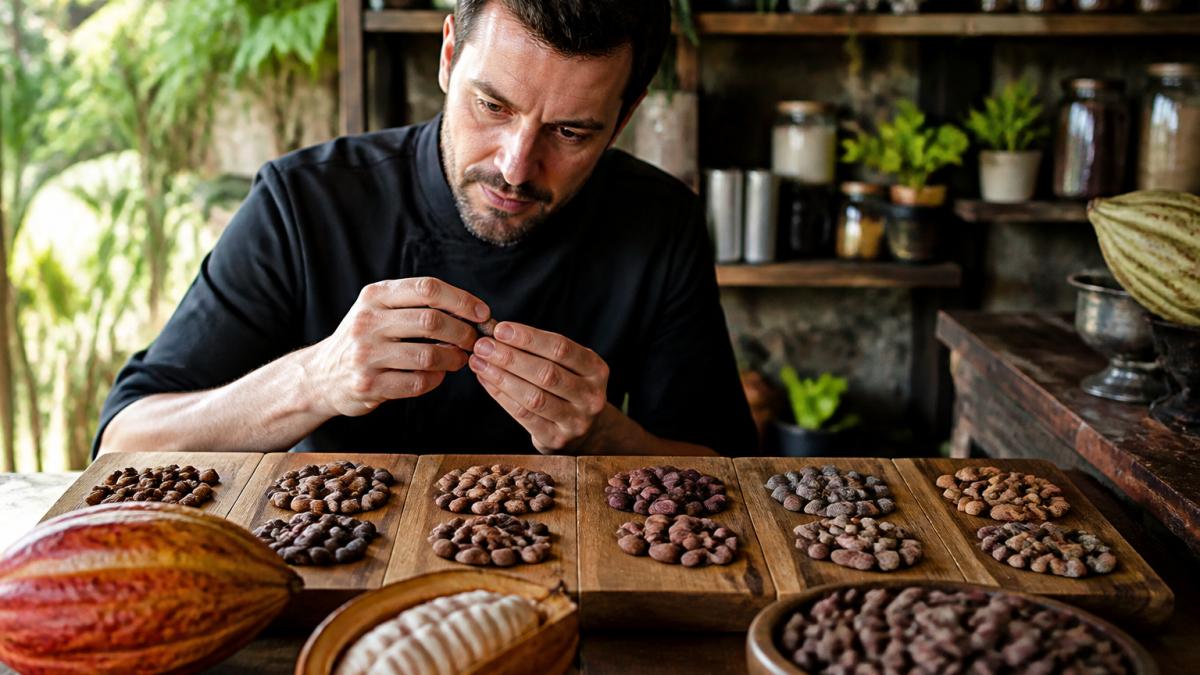
Professional chocolatier examining single-origin chocolate fèves from different countries arranged on a wooden tasting board, with cacao pods and dried beans visible in natural daylight
Ecuador: Floral and Balanced
Ecuadorian chocolate is known for its floral elegance and balanced sweetness. The flavor profile typically includes notes of flowers, subtle spice, and clean roasted cacao. This makes it versatile for ganache, mousse, and molded confections where you want the chocolate to support rather than dominate.
Valrhona Alpaco 66% is a prime example. This single-origin Ecuador couverture delivers floral aromas, sweet spices, and fine roasted cacao notes. Pastry chefs favor it for applications where refined origin character matters. The fève format melts evenly.
Valrhona Alpaco 66% Dark Chocolate Feves – Single-Origin Ecuador – 3kg Couverture Bag
Peru: Fruity with Nutty Depth
Peruvian cacao brings fruity acidity and toasted nut notes to the cup. You'll often detect hints of dried fruit, subtle earthiness, and a silky finish. This profile works well in bonbons, elevated desserts, and plated applications where the chocolate's complexity adds dimension.
Valrhona Illanka 63% showcases these Peruvian characteristics. It's a Grands Crus couverture made exclusively from rare Peruvian cocoa beans, with fruity acidity, subtle toasted nut notes, and gentle sweetness. The fluid consistency and easy-melt fève format make it a practical choice.
Venezuela: Rich and Tannic
Venezuelan chocolate is bold. You'll taste currants, chestnuts, liquorice, and hints of honey and fresh-baked bread. The tannins give it structure and a long finish. This intensity works best in applications where the chocolate is the focal point, dark ganache for bonbons, mousse, or flourless cake.
Valrhona Araguani 72% represents Venezuelan cacao at its most sophisticated. The tannins and complexity pair well with coffee, caramel, and aged spirits. The fève format tempers cleanly for molding and dipping. This is chocolate for chefs who want intensity with real complexity.
Dominican Republic: Evolving Complexity
Dominican cacao reveals different flavors as it melts. You might start with fresh yellow fruit aromas, transition to roasted almonds, and finish on notes of camphor and fresh-baked bread. This progression makes it interesting in applications where you want the taster to experience multiple dimensions.
Valrhona Taïnori 64% delivers this journey. It's a single-origin Dominican Republic couverture for chefs who want evolving complexity in ganache, mousse, enrobing, and molded work. The flavor profile unfolds, creating interest with each bite.
Key Factors to Evaluate When Buying Single-Origin Chocolate
Not all single-origin chocolate is created equal. Several factors determine whether a chocolate will perform well in your kitchen and deliver the flavor you expect.
Cacao Percentage and What It Means
Cacao percentage tells you the proportion of cacao solids and cocoa butter in the chocolate. Higher percentages mean more cacao, less added sugar. A 72% chocolate contains 72% cacao and 28% other ingredients (usually sugar and lecithin).
Higher percentages aren't automatically better. They're different. A 66% chocolate will taste sweeter and smoother than a 72%. A 63% will be rounder and more approachable. Match the percentage to your application:
60-65% dark: Sweeter, more approachable. Good for ganache, mousse, and everyday use.
66-70% dark: Balanced. Works for most applications, ganache, enrobing, molding.
71%+ dark: Bold, tannic. Best where the chocolate is the star of the dish.
Processing Methods and Flavor Impact
How the cacao is fermented and roasted shapes the final flavor. Light fermentation and roasting produce brighter, more acidic notes. Longer fermentation and deeper roasting create earthy, rounded flavors.
Single-origin chocolate makers often highlight their processing approach. Look for terms like "natural fermentation" or "slow-dried" on product descriptions. These signal intentional flavor development. The processing method explains why two chocolates from the same region can taste different.
Format and Intended Use
Chocolate comes in different formats: bars, chips, fèves, and blocks. For professional kitchens, fèves are ideal. They're small, uniform, and melt evenly. Bars require chopping, which takes time and creates inconsistency.
Specialty Food Source stocks professional-grade couverture in fève format. This format is standard in pastry kitchens because it simplifies workflow.
Single-Origin Chocolate Tasting Notes: Reading the Profile
When you buy single-origin chocolate, the packaging often includes tasting notes. These describe the flavor profile you should expect. Learning to read them helps you predict how the chocolate will perform in your kitchen.
Tasting notes typically mention fruit, nut, spice, or floral characteristics. "Fruity acidity" means the chocolate will add brightness to ganache. "Toasted nuts" suggests warmth and earthiness. "Floral" indicates delicate, refined notes.
Pay attention to the intensity words too. A chocolate described as "subtle" or "gentle" will blend into other flavors. One described as "bold" or "rich" will dominate. Match the intensity to your application. If you want the chocolate to support a filling, choose subtle. If the chocolate is the main event, go bold.
The tasting profile also tells you about finish. "Long finish" means the flavor lingers. "Clean finish" means it fades quickly. A long finish works well in bonbons where you want the flavor to develop. A clean finish suits applications where you want to move to the next taste.
Single-Origin vs. Blended Chocolate: Which to Choose
Blended chocolate mixes cacao from multiple origins. This creates consistency and a neutral flavor profile. Single-origin chocolate showcases one region's characteristics.
Choose single-origin when:
You want the chocolate to express terroir and regional character
You're creating a dish where the chocolate flavor is central
You're working with a chef or customer who values origin transparency
You want to tell a story about where the ingredients come from
Choose blended when:
You need consistency across batches
The chocolate is supporting other flavors, not leading
You want a neutral base for high-volume production
Budget is the primary constraint
Many professional kitchens use both. Single-origin for special projects and plated desserts. Blended for high-volume applications where consistency matters most. This approach gives you flexibility without requiring massive inventory.
Where to Buy Single-Origin Chocolate
Finding reliable single-origin chocolate means knowing where professional kitchens source. Specialty retailers and distributors who focus on quality ingredients are your best bet.
Specialty Food Source carries professional-grade single-origin couverture from Valrhona's Grands Crus collection. We stock Ecuador, Peru, Venezuela, and Dominican Republic origins in fève format. These are the same chocolates used by top pastry chefs and bakeries across New England.
We offer flexible ordering options:
Local delivery in Massachusetts, Rhode Island, New Hampshire, and Maine on qualifying orders
Warehouse pickup in Brockton for immediate access
Nationwide shipping for kitchens outside our service area
For chefs and bakers, working with a distributor you trust means reliable supply and consistent product. We've served professional kitchens since 1991. Our team understands what you need because we work with your peers every day.
When evaluating any supplier, ask about storage conditions. Single-origin chocolate is sensitive to temperature and humidity. Proper storage preserves flavor and prevents bloom. Reputable suppliers ship in insulated boxes and maintain cool warehouses.
Common Mistakes to Avoid When Purchasing
Understanding what goes wrong helps you buy smarter.
Treating the label as a guarantee. Single-origin tells you where the cacao comes from. It doesn't guarantee quality, fair pricing, or flavor. Look for additional sourcing information and tasting notes. Ask your supplier about fermentation and processing methods.
Buying based on percentage alone. A higher cacao percentage isn't inherently better. It's a different product with different applications. Match the percentage to your use case, not to a number.
Ignoring storage conditions. Chocolate stored in warm, humid environments deteriorates. Bloom forms. Flavor fades. Buy from suppliers who maintain proper temperature control and use insulated shipping during warm months.
Overcommitting to one origin. Single-origin chocolate is wonderful, but variety keeps your work interesting. Stock two or three origins so you can switch based on the project.
Buying in quantities that exceed your usage. Chocolate has a shelf life. Opened bags absorb moisture and odors. Buy what you'll use within 3-6 months. Specialty Food Source offers flexible order sizes, so you don't have to commit to huge quantities.
Skipping the tasting notes. The flavor profile tells you how the chocolate will behave in your kitchen. Fruity chocolates add brightness. Rich, tannic chocolates add depth. Match the profile to the dish.
Sourcing single-origin chocolate that performs in your kitchen requires understanding where it comes from, how to evaluate it, and where to buy reliably. The chocolate you choose shapes every dessert, ganache, and plated creation. Specialty Food Source makes this easier.
Frequently Asked Questions
What does single-origin chocolate mean?
Single-origin chocolate comes from cacao beans grown in one specific country or region, rather than a blend of beans from multiple sources. This allows the chocolate to express the unique terroir, climate, and processing traditions of that location. Single-origin labels identify the origin but don't guarantee quality or fair compensation, look for additional certifications and sourcing information to verify ethical practices and flavor consistency.
How do you choose a single-origin chocolate by country based on flavor profile?
Each origin produces distinct tasting notes. Ecuadorian single-origin chocolate typically offers floral and balanced characteristics, Peruvian brings fruity acidity with nutty undertones, Venezuelan delivers rich and tannic intensity, and Dominican Republic provides evolving complexity with fruit and spice notes. Match the origin's profile to your intended application: fruity origins work well in mousse and ganache, while tannic chocolates shine in intense desserts and enrobing.
Is single-origin chocolate better than blended chocolate?
Neither is inherently better, they serve different purposes. Single-origin chocolate showcases the distinct flavor characteristics of one region and works best when you want those specific notes to shine through. Blended chocolate combines beans from multiple origins to achieve balanced, consistent flavor profiles ideal for everyday applications. Choose single-origin for signature desserts where chocolate is the star, and blended for reliable, neutral bases in high-volume production.
What should you look for when buying single-origin chocolate online or for professional use?
Verify the cacao percentage, tasting notes, and processing method to match your application. Check the format, fèves melt faster and more evenly than chunks. Confirm the origin country and any certifications. For professional kitchens, source from suppliers experienced in handling couverture chocolate. Specialty Food Source stocks single-origin couverture from Valrhona's Grands Crus range with reliable shipping in insulated boxes and next-day delivery in Massachusetts.