Fall baking season is here · Free local delivery on $250+ in MA & $500+ in RI, NH & ME · Warehouse pickup in Brockton · Shipping chocolate? Add insulated shipping.
Fall baking season is here · Free local delivery $250+ MA · $500+ RI, NH & ME · Pickup in Brockton
Why Single Origin Chocolate Belongs on a Cafe Menu
Sourcing single origin chocolate for cafes has moved from a pastry-chef specialty to a core menu decision. The global bean-to-bar chocolate market is estimated at USD 4.65 billion in 2026 and projected to reach USD 6.56 billion by 2031, a 7.14% CAGR, according to Mordor Intelligence's bean-to-bar market analysis. That growth is running well ahead of the broader chocolate market, which Grand View Research's chocolate market forecast projects at 4.9% annually through 2033.
What does that mean for a cafe in Brockton, MA? Customers now read origin labels the way they read roast profiles. A mocha made with a Madagascar couverture tastes different from one made with a Peruvian bar, and regulars notice. At Specialty Food Source, we supply cafes, bakeries, and dessert programs across New England, and the operators winning repeat business are the ones treating chocolate as a menu ingredient, not a commodity.
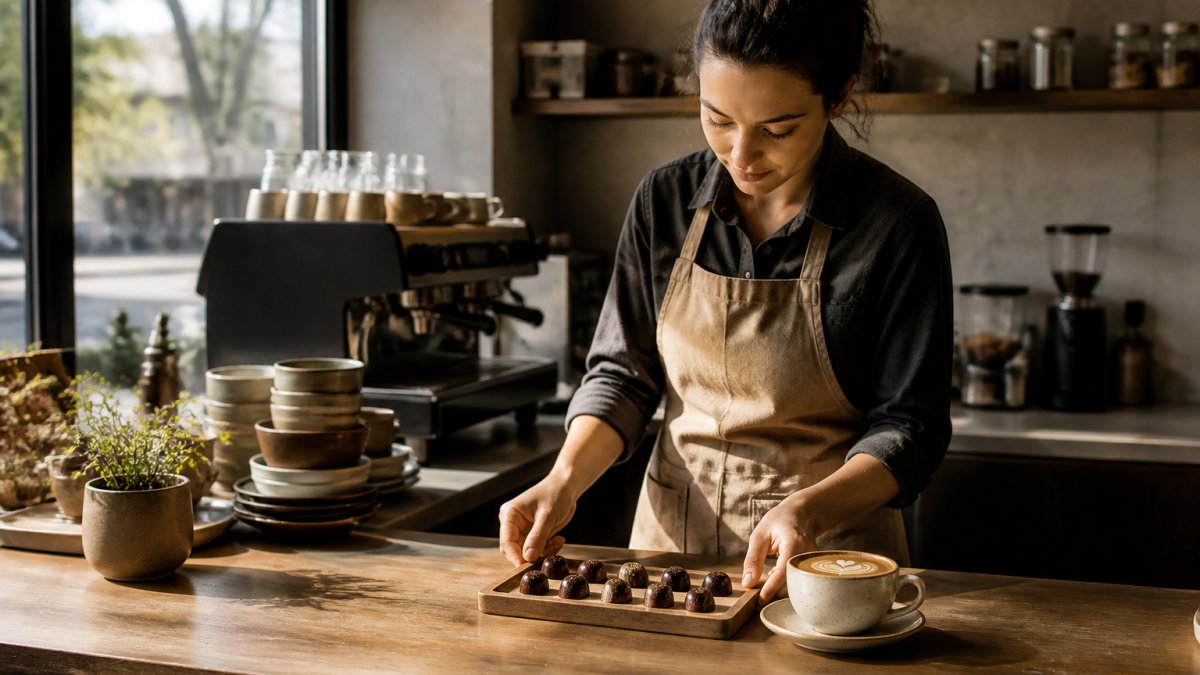
A cafe counter with a barista in an apron arranging a tray of chocolate bonbons and a cup of mocha beside an espresso machine, warm morning light through the window
Key TakeawaySingle origin chocolate is a menu differentiator, not a cost center. Cafes that name the origin on the board sell more dessert and drink pairings than cafes that list "chocolate" generically.
How to Read Single-Origin Chocolate Tasting Notes
Single origin chocolate is couverture made from cacao grown in one defined region, so the bar carries that region's flavor instead of a blended, neutral profile. Tasting notes describe what that cacao tastes like: fruit, spice, nuts, floral, or roasted cocoa.
Suppliers label these notes for a reason. A bar listed as "red fruit, fresh acidity" will behave differently in a ganache than one listed as "sweet spice, roasted cocoa." When you're sourcing, read the notes as a pairing tool. Bright, fruity chocolates lift citrus and berry desserts. Rounder, spicier chocolates hold up against caramel, coffee, and aged spirits.
Matching Origin Flavor Profiles to Drink and Dessert Menus
Madagascar (red fruit, fresh acidity): pair with raspberry mochas, passion fruit tarts, and citrus sorbets
Ecuador (floral, sweet spice): pair with honey drinks, vanilla desserts, and delicate molded confections
Peru (fruity acidity, toasted nuts): pair with nut lattes, praline, and plated desserts
Dominican Republic (yellow fruit, roasted almond): pair with caramel drinks and everyday ganache
Venezuela (currant, chestnut, honey): pair with espresso, dark ganache, and flourless cake
Ghana (sweet spice, roasted cocoa): pair with spiced mochas and full-bodied hot chocolate
What Separates Good Single-Origin Chocolate Suppliers
The best single-origin chocolate suppliers do three things well: they stock real origin couverture, they ship it so it arrives intact, and they answer sourcing questions with specifics. Everything else is marketing.
That third point matters more than most cafes expect. A 2023 study published in ScienceDirect on transparency in the craft chocolate industry found that ethical cacao sourcing is a significant motivator for transparency among craft chocolate makers, with product quality driving it too. Suppliers who can tell you where a bar's cacao came from, and why they stock it, are usually the ones who also get the logistics right.
Freshness, Format, and Fulfillment
Three practical checks separate a working supplier from a frustrating one:
Freshness: ask for the manufacture date, not just the best-by date. Couverture absorbs odors and goes stale faster than most cafes assume.
Format: fèves (oval discs) melt faster and temper more evenly than chopped blocks. For a busy bar, that saves real time.
Fulfillment: insulated shipping matters in New England summers. Chocolate that melts in transit is a ruined order, not an inconvenience.
Watch OutNever accept a supplier who ships couverture in a plain box during warm months. Melted chocolate re-tempers unevenly, blooms, and will not hold a snap in enrobed desserts. Confirm insulated packaging before you place a standing order.
Chocolate Sourcing Questions for Suppliers
Ask these chocolate sourcing questions for suppliers before you commit to a standing order. The answers tell you whether a supplier understands professional kitchens or just moves boxes.
What is the manufacture date on the current stock?
Is the couverture shipped in insulated packaging year-round?
Can you supply the same origin consistently, or does availability swing?
What's the minimum order for a small cafe?
Do you offer standing weekly orders with one invoice?
What's the return policy if a shipment arrives damaged or wrong?
Can you source specific origins and cacao percentages on request?
A supplier who hesitates on freshness or fulfillment will cost you more in wasted product than any savings on the invoice. Small operations deserve straight answers here, not account minimums that assume a large kitchen.
Chocolate Storage for Cafes: Temperature, Humidity, and Rotation
Chocolate storage for cafes comes down to three controls: temperature, humidity, and rotation. Get these right and your couverture stays workable for months.
Store couverture between 60 and 65°F, away from humidity and strong odors. A dry storage area off the line works better than a shelf above the espresso machine, where heat and steam do constant damage. Rotate stock first-in, first-out, and label every bag with its arrival date. Chocolate does not expire quickly, but it does pick up flavors from everything around it.
Pro TipKeep a small digital thermometer in your chocolate storage area and check it weekly. Most cafes discover a heat problem only after a batch of ganache seizes, by which point the stock is already compromised.
Storage Factor
Target
Why It Matters
Temperature
60-65°F
Prevents bloom and keeps temper stable
Humidity
Low, dry area
Moisture causes sugar bloom and seizing
Odors
Away from spices, onions
Cocoa butter absorbs surrounding smells
Rotation
First in, first out
Older stock loses snap and flavor
Labeling
Arrival date on every bag
Makes rotation automatic, not guesswork
Single-Origin Chocolate Options for Cafe Menus
A cafe menu needs three chocolate profiles: an everyday dark, a milk option, and one signature origin that sets the program apart. Building around those three keeps your ordering simple and your menu coherent.
We stock single-origin couverture in fève format from Valrhona's Grands Crus range, sold in 3 kg bags and 3 x 3 kg cases. Fèves melt evenly and temper cleanly, which matters when your bar is pulling drinks and plating dessert at the same time. You can browse the full Valrhona collection or search our chocolate and cocoa range to match origins to your menu.
Valrhona Bahibe 46% (Dominican Republic): a high-cacao milk chocolate with full cocoa flavor and restrained sweetness. Best for milk mochas, bonbons, and glazes that should still taste of cocoa.
Valrhona Alpaco 66% (Ecuador): floral aromas, sweet spices, and roasted cacao. Best for ganache, enrobing, and molded confections where subtlety matters.
Valrhona Manjari 64% (Madagascar): vibrant red fruit with fresh acidity. Best for fruit-forward desserts, sorbets, and raspberry pairings.
Valrhona Illanka 63% (Peru): fruity depth with toasted nut notes and a silky finish. Best for luxury bonbons and plated applications.
Valrhona Taïnori 64% (Dominican Republic): yellow fruit, roasted almond, and a long evolving finish. Best for signature ganache and molded work.
Valrhona Araguani 72% (Venezuela): intensely tannic with currant, chestnut, and honey. Best for espresso pairings and flourless cake.
Valrhona Nyangbo 68% (Ghana): warm sweet spice and mellow roasted cocoa. Best for spiced drinks and full-bodied hot chocolate.
Valrhona Itakuja 55% (Brazil): explosive fruit from a passion fruit double fermentation. Best for signature bonbons and plated desserts.
Valrhona Macaé 62% (Brazil): fruity with toasted nuts and black tea. Best for ice creams, sorbets, and coating.
Best ForCafes running a compact dessert menu: start with one milk option, one everyday dark, and one signature origin. Three SKUs cover most drink and dessert pairings without crowding your storage.
Conclusion: Building a Single-Origin Program That Sells
The hard part of sourcing single origin chocolate for cafes isn't finding couverture. It's building a program customers can taste, name, and come back for. Most cafes fail because they buy one generic dark, never train staff on the origin story, and wonder why dessert sales stay flat.
Valrhona Alpaco 66% Dark Chocolate Feves – Single-Origin Ecuador – 3kg Couverture Bag
Specialty Food Source stocks single-origin couverture and more than 5,000 professional-grade ingredients, with free local delivery on qualifying orders across MA, RI, NH, and ME, warehouse pickup in Brockton, and nationwide shipping in insulated packaging. Our wholesale accounts come with dedicated support and standing weekly orders, so you get one rep, one truck, and one invoice. Browse our in-stock chocolate collection and build a single-origin menu your regulars will ask for by name. Questions? Reach us at support@specialtyfoodsource.com or text (508) 941-8992.
Frequently Asked Questions
What does single-origin chocolate mean?
Single-origin chocolate is made from cacao grown in one defined place, such as a country, region, or estate. The label tells you where the beans came from, not how good the chocolate is. Bar & Cocoa notes that the term says nothing on its own about quality or whether producers were paid fairly. For a cafe, that means origin is a starting point for flavor, and you still need to taste the bar and ask about sourcing before it earns a spot on your menu.
What should cafes ask a chocolate supplier about sourcing?
Ask where the cacao is grown, how the beans were fermented and dried, and how the supplier stores the chocolate before it ships. A 2023 study in ScienceDirect found ethical cacao sourcing and product quality are the two main reasons craft chocolate makers share sourcing details. Ask for the cacao percentage, the format (fèves or blocks), and the shelf life. If the supplier cannot answer basic origin and storage questions, look elsewhere.
How should cafes store chocolate to preserve its quality?
Store couverture sealed between 60°F and 65°F, away from humidity, strong odors, and direct light. Valrhona's Macaé 62% lists storage at 16-18°C (60-65°F) in a cool, dry place with an 18-month shelf life from manufacture. For cafes, that means a dedicated dry storage area, not the walk-in next to onions or cleaning supplies. Rotate stock first-in, first-out, and keep bags closed between uses to prevent bloom and odor pickup.
Is single-origin chocolate suitable for hot chocolate and baking?
Yes. Single-origin couverture works for hot chocolate, ganache, mousse, and molded work. The fève format melts evenly and tempers cleanly, which matters for high-volume cafe service. For drinks, a fruity dark like Valrhona Manjari 64% adds brightness, while a higher-cacao option like Araguani 72% gives a longer, more intense finish. Match the origin's tasting notes to the drink or dessert so the chocolate reads as intentional rather than generic.
How can a cafe evaluate the flavor of single-origin chocolate?
Taste the chocolate on its own before you build a drink around it. Note the first impression, the mid-palate, and the finish, and write those notes down so staff can describe them to customers. Compare two origins side by side, such as Valrhona Illanka 63% from Peru against Manjari 64% from Madagascar, to see how acidity, fruit, and roast differ. Then test each one in your actual mocha, ganache, or hot chocolate recipe before committing to a full case.