Fall baking season is here · Free local delivery on $250+ in MA & $500+ in RI, NH & ME · Warehouse pickup in Brockton · Shipping chocolate? Add insulated shipping.
Fall baking season is here · Free local delivery $250+ MA · $500+ RI, NH & ME · Pickup in Brockton
How to Store Specialty Flours for Freshness: The Basics
To store specialty flours for freshness, keep them airtight, cool, dark, and dry. At Specialty Food Source in Brockton, MA, we ship almond, buckwheat, and whole-grain flours to restaurants and bakeries weekly, and the same enemies ruin every batch: air, heat, and moisture.
Specialty flours cost more than all-purpose, so a ruined batch hurts, and pantry pests find them irresistible.
Key TakeawayAirtight, cool, dark, and dry. Miss any one of those four and your flour starts losing quality immediately.
How Long Does Flour Last After Opening?
Once opened, most specialty flours hold peak quality for one to three months in a cool pantry; whole-grain and nut flours fade faster because their oils go rancid.
White and bread flours last 6-12 months sealed; whole-grain and nut flours 1-3 months, longer refrigerated; gluten-free blends vary, so check the label. Once opened, the clock restarts, ignore the printed date.
For longer storage, refrigerate or freeze, then bring flour to room temperature before baking so it does not throw off your hydration.
Best Airtight Containers for Flour Storage
Glass jars with screw-top lids beat plastic bags every time. The USDA FoodSafety guidance on food storage backs the basics: keep dry goods sealed, cool, and away from pests. For a professional kitchen, we recommend glass or heavy food-grade plastic with a true gasket seal.
Le Parfait Screw Top Jars, French Glass Storage Jars with Colorful Airtight Screw Lids
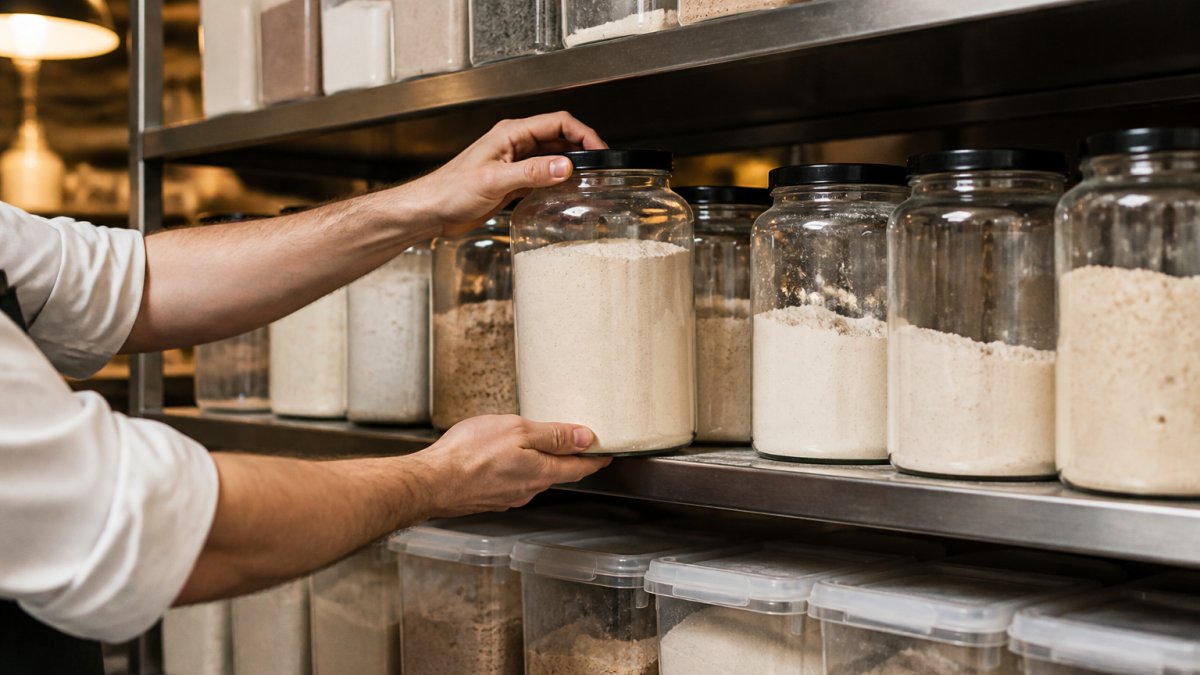
A professional kitchen shelf lined with clear airtight glass and plastic containers filled with labeled specialty flours, a baker's hands reaching for one container under warm overhead lighting
What matters most: a real seal, dark storage, a size that matches your usage, and labels with the flour type and open date.
Our Le Parfait screw-top jars and PREMIUS airtight containers seal properly and stack cleanly. Browse our storage collection to match sizes to your shelf.
Pro TipWrite the open date on every container, not just the flour type. In a busy kitchen, that date is the only thing that tells you which bin to use first.
How to Prevent Pantry Bugs in Flour
Pantry bugs are the number one complaint we hear from restaurants and retail customers. Eggs often arrive in the flour itself, so sealing alone is not enough, freeze new flour for a few days before it goes on the shelf.
Then transfer flour out of paper bags the day it arrives, keep one scoop per container, wipe shelves monthly, and never mix new flour into an old bin.
If you spot webbing, clumps, or a sour smell, toss the whole batch.
How to Store Whole-Grain Flour
Whole-grain flour needs cold storage. The bran and germ carry oils that turn rancid at room temperature, so refrigerate or freeze whole-grain and nut flours in an airtight container and use them within a few months.
Our Organic Buckwheat Flour and Blanched Almond Flour both reward cold storage. Keep them sealed, dated, and rotated.
In Brockton and across New England, humidity swings hard between seasons, making airtight storage non-negotiable. Keep flour away from the stove, dishwasher, and windows; a cool interior cabinet or dedicated pantry shelf works best.
Our Brockton warehouse offers pickup, and we deliver locally across MA, RI, NH, and ME, with nationwide shipping available.
Flour Type
Pantry
Fridge or Freezer
Peak Freshness
White and bread
Yes
Optional
6-12 months
Whole-grain
No
Yes
1-3 months
Nut flours
No
Yes
1-3 months
Gluten-free blends
Yes
Optional
Check the label
Frequently Asked Questions
Should specialty flour be stored in the refrigerator or freezer?
For long-term storage, especially for whole-grain and nut flours, the freezer is best. Place flour in an airtight container or freezer bag, squeeze out excess air, and store for up to six months. Bring flour to room temperature before using to prevent condensation. For short-term storage, a cool, dark pantry works well. Restaurants and bakeries often use a combination: a small amount in the pantry for daily use and the bulk in the freezer.
How can you tell if flour has gone bad?
Signs that flour has gone bad include a musty or sour smell, a dull or yellowish color, clumping, or visible mold. Whole-grain and nut flours go rancid faster due to their oil content. If you see webbing or small insects, discard the flour immediately. To avoid waste, label containers with the date you opened them and rotate stock regularly. When in doubt, throw it out, because using spoiled flour can ruin an entire batch of baked goods.
Can flour be stored in its original bag?
The original bag is fine for short-term storage if kept in a cool, dark place, but it is not airtight. For long-term storage or in busy kitchens, transfer flour to an airtight container. This prevents moisture, pests, and odors from affecting the flour. If you keep the bag, place it inside a larger resealable container or a heavy-duty plastic bin. Always label with the date and type of flour for easy rotation.
Running a kitchen means every ingredient has to earn its shelf space, and flour that goes stale or buggy is money lost. Specialty Food Source stocks professional-grade specialty flours with fast local delivery, warehouse pickup in Brockton, and nationwide shipping, plus wholesale accounts with one rep, one truck, and one invoice. Reach us at support@specialtyfoodsource.com or text (508) 941-8992. Shop in-stock items and keep your pantry fresh.