Fall baking season is here · Free local delivery on $250+ in MA & $500+ in RI, NH & ME · Warehouse pickup in Brockton · Shipping chocolate? Add insulated shipping.
Fall baking season is here · Free local delivery $250+ MA · $500+ RI, NH & ME · Pickup in Brockton
Why Bulk Flour Freshness Matters in a Professional Kitchen
Learning how to verify freshness of bulk specialty flour starts with one hard truth: a printed date on a bag tells you very little. The USDA's Food Safety and Inspection Service explains that open dating is simply a calendar date applied by the manufacturer or retailer, not a guarantee of quality (USDA FSIS explanation of food product dating). So the bag in your dry storage might be fine, or it might be fading fast.
At Specialty Food Source, we ship flour out of our Brockton, MA warehouse every week, and freshness questions come up constantly. Here is the short answer: judge bulk flour by smell, texture, and storage history, not by the label alone.
That matters because flour is the backbone of your menu. Stale flour bakes flat, tastes dull, and can carry off-odors into every loaf and pastry. The good news? A few simple checks catch problems before they hit your mixer.
How to Tell If Flour Has Gone Bad: Sensory Checks That Work
How to tell if flour has gone bad comes down to your senses. Fresh flour smells mild and slightly sweet, feels soft and powdery, and tastes neutral. Spoiled flour smells musty or sour, clumps when squeezed, and leaves a bitter taste.
Run these three tests before you bake:
Smell, Touch, and Taste Tests
Smell: Open the bag and breathe in. Any sour, musty, or paint-like note means trouble.
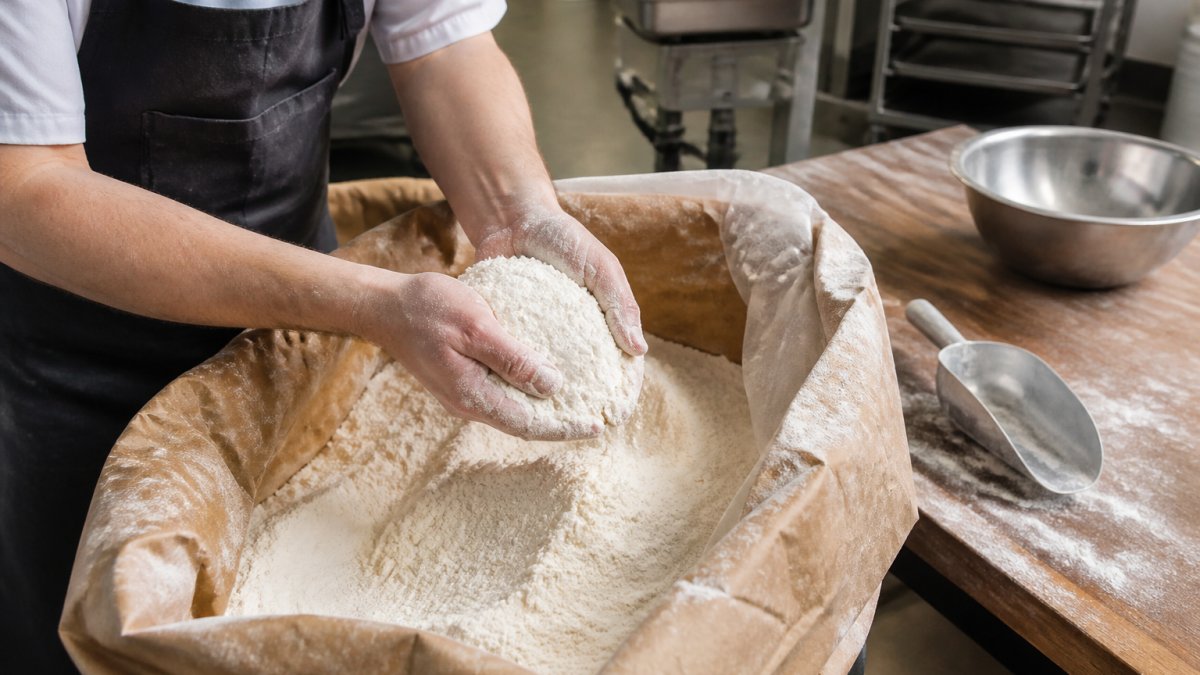
Touch: Squeeze a handful. Fresh flour falls apart. Clumps that stay packed point to moisture.
Look: Watch for gray or yellowish patches, webbing, or tiny insects.
Taste: Pinch a small amount. Bitter or soapy flavors mean the flour is done.
Sift: Run a cup through a fine sieve. Grit and lumps show up fast.
A baker's hands scooping flour from a large open bulk bag in a professional kitchen, inspecting the texture and color under bright overhead light
Watch OutNever taste flour from a bag that smells musty or shows signs of pests. Mold and insect activity can spread through an entire lot, and one spoiled batch can ruin a full day of production.
Bulk Flour Shelf Life: What to Expect by Flour Type
Bulk flour shelf life varies by type and storage. White flour keeps longest, whole grain flours turn fastest, and nut or alternative flours have the shortest window of all.
A 2026 Bon Appétit piece consulted a baking expert on spotting spoiled flour and storing it well, though it offers guidance rather than hard limits (Bon Appétit on how to tell if flour is still good). One widely shared 2026 social post recommends using flour within 4 to 6 months for best flavor, but it does not specify flour type or storage conditions, so treat it as a general nudge rather than a rule.
Flour Type
Typical Freshness Window
Watch For
All-purpose white
6-12 months
Moisture clumps
Bread flour
6-12 months
Off smells
Whole wheat
3-6 months
Rancid, oily notes
Buckwheat and alternative
3-6 months
Bitter taste
Nut flours
1-3 months
Sharp, stale aroma
Whole grain flours carry oils that go rancid faster. A study in the journal Foods examined the nutrition of flours used for home baking, including whole-grain types, and confirmed how much variety exists across products (Foods journal analysis of home baking flours). That variety is exactly why one universal date fails.
How to Store Bulk Flour to Preserve Freshness
How to store bulk flour well means controlling three things: air, heat, and moisture. Get those right and you add weeks, sometimes months, to usable life.
Keep bags off the floor and away from walls. In Brockton and across New England, humid summers are the real enemy. A dry, cool storeroom beats a warm corner every time.
Containers: Use food-grade bins with tight lids. Keep flour in its original bag inside the bin for extra protection.
Temperature: Store below 75°F. Cooler is better.
Humidity: Keep the room dry. Damp air ruins flour fast.
Rotation: Label every lot with its receive date. Use oldest first.
Pests: Keep bay leaves or traps nearby and inspect shelves monthly.
Pro TipFreeze whole grain and alternative flours for 48 hours before storing them in bulk. This stops insect eggs from hatching and slows the oils from turning rancid.
Your Flour Receiving and Inventory Checklist
A flour receiving and inventory checklist catches problems at the door, where they are cheapest to fix. Inspect every delivery before you sign, and log what you find.
What to Inspect at Delivery
Bag is intact, with no tears, stains, or damp patches
Mill date or lot code is legible and recent
No musty or sour smell when the bag is opened
Flour is loose and powdery, not clumped
No signs of insects, webbing, or pests
Storage area is clean, dry, and off the floor
Lot logged with receive date and rotation order
That checklist is your first line of defense. A common mistake is signing for a pallet without opening a single bag. Once it is in dry storage, a bad lot blends into the rest.
Key TakeawayThe receiving door is where freshness is won or lost. Ten minutes of inspection saves hours of remakes and refunds.
When to Use, Reject, or Discard a Bulk Flour Lot
Decide fast and decide clearly. Fresh flour goes straight to production, questionable flour gets tested, and spoiled flour leaves the building.
Test: Slight clumping or an uncertain date. Bake a small test batch first.
Reject: Musty smell, pests, or damage at delivery. Send it back on the spot.
Discard: Sour taste, visible mold, or insect activity. Do not bake with it.
Specialty Food Source stocks professional-grade flours like King Arthur Baker's Classic Organic Flour in 50 lb bags, milled for consistent bakery results. We also carry French artisan blends and organic buckwheat for gluten-free work. You can browse our flour collection to compare options, and our team will help you plan standing weekly orders so nothing sits too long. Questions? Reach us at support@specialtyfoodsource.com or text (508) 941-8992.
Fresh flour is not a luxury. It is the difference between bread that sells and bread that sits. If you are tired of guessing whether a bulk bag is still good, Specialty Food Source makes it simple. We offer 5,000+ in-stock items, free local delivery on qualifying orders across MA, RI, NH, and ME, and warehouse pickup in Brockton, MA. Our wholesale accounts come with dedicated support and standing weekly orders, so you always know what is arriving and when. Get started with Specialty Food Source and keep your kitchen stocked with flour you can trust.
Frequently Asked Questions
How can you tell if bulk specialty flour is fresh?
Fresh bulk specialty flour should smell mild and slightly sweet, with no musty or sour notes. It should feel soft and powdery, not clumpy or damp. Check the mill date on the bag, inspect for pests or moisture damage, and do a small taste test if you are unsure. A printed best-by date alone does not confirm freshness, so combine sensory checks with proper storage records for reliable bulk flour freshness.
Does whole-grain flour go stale faster than refined flour?
Yes. Whole-grain flours contain the bran and germ, which carry oils that turn rancid over time. Refined flours like King Arthur Baker's Classic Organic Flour have those parts removed, so they keep longer. Store whole-grain and specialty flours in airtight containers away from heat and light, and rotate them faster than white flour. Check bulk flour shelf life by type and use whole-grain lots first.
Can you use flour after its best-by date?
Often yes, if the flour has been stored cool and dry and passes sensory checks. USDA FSIS explains that open dating is a manufacturer-applied calendar date, not a safety deadline. Smell the flour, look for clumps or pests, and taste a small pinch. If it smells musty or tastes bitter, discard it. For bulk flour freshness, treat the date as one signal among several.
What should a kitchen do with a bulk flour lot that seems questionable?
Quarantine the lot away from other ingredients and run your flour receiving and inventory checklist: check the mill date, smell, texture, and any signs of moisture or pests. If it fails, contact your supplier for a replacement and document the issue. Do not blend questionable flour into production. Specialty Food Source customers can reach support@specialtyfoodsource.com or text (508) 941-8992 for help with a lot.