Fall baking season is here · Free local delivery on $250+ in MA & $500+ in RI, NH & ME · Warehouse pickup in Brockton · Shipping chocolate? Add insulated shipping.
Fall baking season is here · Free local delivery $250+ MA · $500+ RI, NH & ME · Pickup in Brockton
What Professional Grade Kitchen Pantry Essentials Actually Are
Professional grade kitchen pantry essentials are the foundational ingredients that separate high-performing kitchens from mediocre ones. At Specialty Food Source, we define professional grade pantry essentials as carefully selected, high-quality ingredients that maintain consistency across high-volume production, deliver superior flavor profiles, and meet the exacting standards that chefs and food makers demand.
These aren't generic supermarket staples. They're ingredients sourced for reliability, shelf stability, and performance under the demands of a working kitchen. A professional-grade lentil holds its shape through a full braise. A professional-grade salt brings mineral complexity. A professional-grade oil doesn't break down under heat.
The difference shows in your finished product. Restaurants and bakeries in Brockton and across New England that stock professional grade kitchen pantry essentials see consistency batch after batch, reduce waste from ingredient failure, and build menus around ingredients they trust completely.
Pro TipProfessional grade doesn't always mean expensive. It means sourced for function. A bulk dried lentil performs better in volume cooking.
Building Your Restaurant Pantry Checklist by Category
A restaurant pantry checklist organized by category keeps your inventory logical and your ordering predictable. The key is knowing what belongs in each section and why.
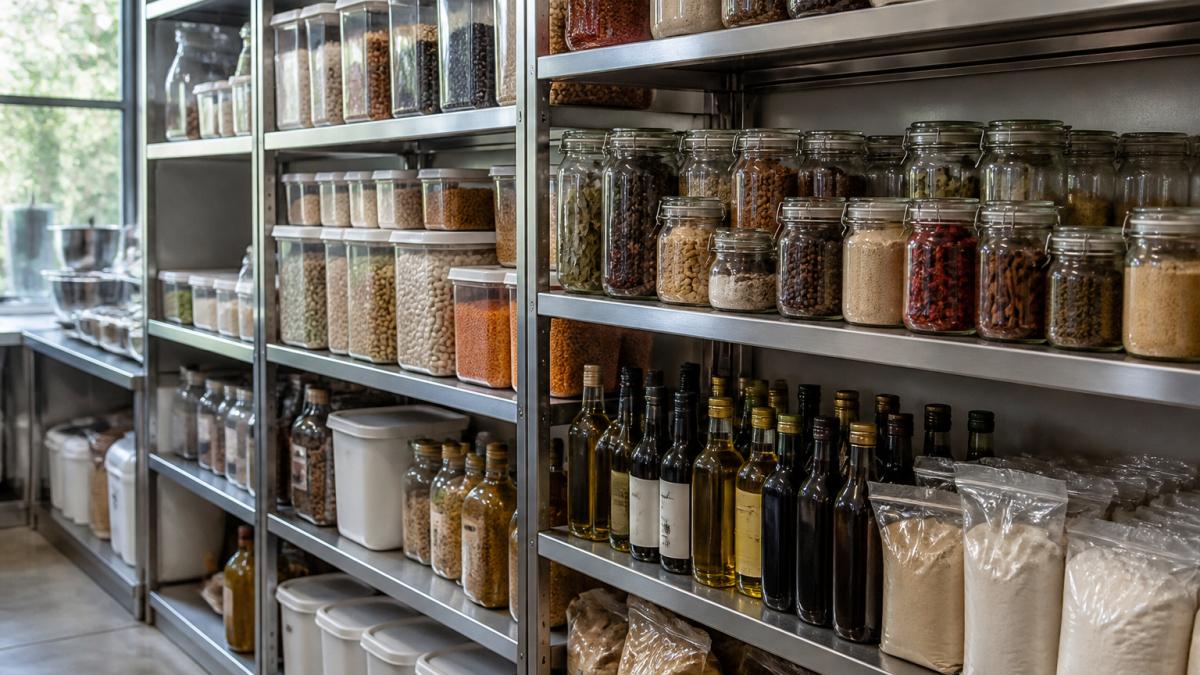
Professional kitchen pantry with organized shelves displaying labeled containers of legumes, dried goods, spices in glass jars, oils in bottles, and specialty flours, natural overhead lighting
Dry Goods and Legumes
Dry goods form the backbone of any professional kitchen. These are ingredients that don't require refrigeration, ship easily, and deliver consistent results when you need volume.
Legumes like green lentils are non-negotiable for kitchens running soups, salads, and plant-based dishes. Unlike canned legumes, dried lentils give you control over texture and cooking time. They hold their shape through long braises, which matters when you're feeding 200 people the same dish.
Green Lentils | JN KIDDS Distributors
Rice, grains, and pasta round out this category. Arborio rice for risotto, jasmine rice for Asian-inspired plates, dried pasta in multiple shapes for different sauces. Stock these in quantities that match your weekly volume, not your storage space. Bulk ordering through Specialty Food Source means you're not running to a local supplier mid-service.
Beans, chickpeas, and split peas follow the same logic as lentils: they're affordable, they scale, and they deliver consistent results when sourced from a reliable supplier.
Oils, Vinegars, and Condiments
Oils are where kitchen performance gets tested. A low-smoke-point oil will break down in your sauté pan. A rancid oil will ruin a salad dressing.
Professional kitchens stock multiple oils for different purposes. Avocado oil works for high-heat cooking and finishing. Extra virgin olive oil goes to salads and cold applications. Neutral oils like grapeseed or sunflower handle everyday cooking without competing flavors.
Vinegars matter equally. Balsamic, red wine, white wine, rice, and apple cider vinegars each bring different acidity and flavor profiles to dressings, reductions, and finishing touches.
Condiments like soy sauce, fish sauce, hot sauce, and specialty mustards should be sourced in bulk. These are ingredients that appear across multiple dishes and drive flavor consistency.
Spices and Seasonings
Spices lose potency over time. A professional kitchen buys whole spices when possible and grinds them fresh, or sources pre-ground spices in quantities that turn over monthly, not yearly.
Frontier Co-op Organic Fair Trade Fine Grind Black Pepper, 1 lb
Celtic Sea Salt Fine Ground brings mineral complexity that refined salt doesn't. It's worth the investment for any kitchen serious about seasoning.
Celtic Sea Salt Fine Ground (Case of 6)
Dried herbs like oregano, thyme, rosemary, and bay leaves round out the spice cabinet.
Baking Staples and Specialty Flours
A bakery or pastry operation lives or dies by flour consistency. Professional-grade flours are milled to specific protein levels, moisture content, and particle size. They perform the same way every time you use them.
All-purpose flour, bread flour, pastry flour, and cake flour each have different protein levels and gluten development. Specialty flours like spelt, rye, or einkorn appeal to artisanal bakers. Sourcing these through a supplier means you're not guessing at freshness or settling for whatever the supermarket has in stock.
Baking essentials also include sugar (granulated, brown, demerara), baking powder, baking soda, yeast, and cornstarch. These are ingredients that appear in nearly every bake. Buying in bulk ensures you never run out mid-production.
Commercial Kitchen Inventory Checklist Essentials
A commercial kitchen inventory checklist differs from a home cook's pantry. You're tracking items that move weekly, managing par levels to avoid stockouts, and ordering in quantities that justify wholesale pricing.
Start with your most-used ingredients. What do you cook with every single day? Those items should be on a standing order. What do you use three times a week? Those belong on a weekly checklist. What's seasonal or occasional? Those get ordered as needed.
The checklist should include columns for item name, par level (the quantity you maintain), current stock, and reorder point. When current stock hits the reorder point, you place an order. This prevents emergency runs to retail suppliers and keeps your costs predictable.
Specialty Food Source helps manage this by offering standing weekly orders for professional kitchens. One rep, one truck, one invoice means your ordering process is simplified, not scattered across multiple suppliers.
Dry Goods Storage Best Practices for Freshness
Dry goods storage determines how long your ingredients stay viable. Moisture, temperature, and light are the three enemies of pantry longevity.
Store dry goods in cool, dry spaces away from direct sunlight. Heat accelerates oxidation in oils and spices. Humidity invites mold and pest activity. Light breaks down vitamins and fades color.
Transfer bulk ingredients into airtight containers once you open them. Clear containers let you see when you're running low. Label containers with the item name and the date you opened or received it. This prevents confusion and helps you rotate stock properly.
Spices and dried herbs should live in opaque containers away from heat sources. Keep them away from the stove, even though that's the most convenient spot. The heat from cooking will degrade them faster than you'd expect.
Oils should be stored in dark bottles in cool conditions. Even quality oils go rancid when exposed to heat and light. A dedicated cool shelf, not above the stove, keeps oils fresh longer.
Watch OutOpened containers of specialty flours can develop off-flavors if stored too long near onions, garlic, or strong spices. Store flours separately for best results.
FIFO Inventory Method for Restaurants
FIFO stands for First In, First Out. It's the inventory management method that keeps your kitchen from serving stale ingredients while newer stock sits behind them.
When you receive new stock, place it behind older stock of the same item. When you grab an ingredient, you grab from the front. The oldest item gets used first. This ensures nothing sits in your pantry past its prime.
FIFO requires discipline. It requires staff to understand the system. It requires checking dates and rotation during prep. But it prevents waste, ensures consistent ingredient quality, and keeps your kitchen operating at peak freshness.
Label everything with a received date or use-by date. Train your team to check dates before using any ingredient. Make rotation a part of your opening checklist, not an afterthought.
Why Professional Grade Ingredients Matter
Professional grade ingredients deliver three things that supermarket staples don't: consistency, reliability, and performance.
Consistency means the same ingredient performs the same way every time. A professional-grade lentil cooks to the same texture in the same time, batch after batch. A professional-grade flour develops gluten at the same rate. This consistency lets you dial in recipes and trust them.
Reliability means your supplier has your back. If an ingredient fails to meet standards, a professional supplier replaces it. Specialty Food Source stands behind every ingredient we stock. When a restaurant or bakery orders from us, they're not gambling on freshness or quality.
Performance means ingredients that work under pressure. High-smoke-point oils that don't break down. Flours that develop gluten on schedule. Spices that deliver flavor punch, not dust. These are ingredients built for high-volume kitchens.
When you eliminate waste from ingredient failure, when you reduce the labor spent troubleshooting inconsistent results, professional-grade ingredients actually save money.
Sourcing Professional Grade Pantry Essentials Reliably
Finding a reliable supplier who understands the professional grade kitchen pantry essentials list is non-negotiable. You need someone who understands your volume, your standards, and your timeline.
Look for suppliers with deep inventory. A supplier that stocks 5,000+ items can usually fulfill your order completely instead of making you hunt across multiple sources.
Ask about freshness guarantees. Does the supplier stand behind freshness claims? A good supplier will answer these questions directly.
Check delivery options. Can they deliver locally? Do they offer warehouse pickup? Can they ship nationwide if you need it? Flexibility matters when your kitchen's needs change seasonally or when you're scaling production.
Look for suppliers who work with your business model. Some suppliers require minimum orders that don't make sense for small operations. Others offer standing orders and flexible quantities.
Food Network's pantry essentials checklist provides a general framework for home cooks, but professional kitchens need deeper, more specialized sourcing. That's where a supplier focused on professional-grade ingredients makes the difference.
Building a professional grade kitchen pantry essentials list takes intentionality, but the payoff is immediate. Your kitchen runs smoother. Your food tastes better. Your waste drops.
Specialty Food Source has been supporting professional kitchens across New England since 1991. We stock over 5,000 professional-grade ingredients and offer flexible ordering options including warehouse pickup in Brockton and local delivery.
Storage Method
Best For
Duration
Key Condition
Airtight containers
Dry goods, spices, flours
Cool, dark location
Dark glass bottles
Oils, vinegars
6-12 months
Away from heat and light
Original packaging
Legumes, grains
6-12 months
Sealed, labeled with date
Opaque containers
Spices, dried herbs
6-12 months
Below 70°F, low humidity
Frequently Asked Questions
What should be in a professional kitchen pantry?
A professional grade kitchen pantry should stock dry goods (legumes, grains, pasta), oils and vinegars with high smoke points, a full range of spices and seasonings, quality salt and pepper, baking essentials, and specialty ingredients matched to your menu. The exact contents depend on your cuisine focus, but professional kitchens prioritize consistency, shelf stability, and ingredients that hold up through high-volume cooking without quality loss.
How do professional kitchens organize their commercial kitchen inventory checklist?
Professional kitchens organize inventory by category (dry goods, spices, oils, baking supplies) and track stock levels against a master checklist. Most use a par system where minimum quantities are set for each item, triggering reorders when stock drops below that level. Regular counts, weekly or bi-weekly, catch usage patterns and prevent stockouts. Digital inventory systems or simple spreadsheets help track what's on hand versus what's needed.
What is the FIFO inventory method for restaurants, and why does it matter?
FIFO (First In, First Out) means older stock gets used before newer deliveries. In practice, when new ingredients arrive, staff move existing stock forward and place new items behind. This prevents ingredients from sitting too long and expiring. For professional kitchens, FIFO protects food quality, reduces waste, maintains consistency in recipes (older batches of spices may have different flavor intensity), and ensures compliance with food safety standards.
How should dry goods be stored to keep them fresh in a commercial kitchen?
Store dry goods in airtight containers away from heat, light, and moisture. Keep pantries cool and dry to slow degradation of spices, flours, and legumes. Label all containers with contents and date received. Store heavier items on lower shelves and lighter goods higher up. Separate raw ingredients from prepared items, and keep pantries organized so staff can quickly locate items and rotate stock properly using FIFO rotation.
How often should a professional kitchen check pantry inventory?
Most professional kitchens conduct spot checks 2-3 times per week and full inventory counts weekly or bi-weekly, depending on volume and menu complexity. High-volume operations or those with seasonal menu changes may count more frequently. Regular checks catch usage patterns, identify slow-moving items, and prevent emergency shortages that disrupt service. Smaller operations may do full counts every two weeks with quick daily spot checks on critical items.
What pantry staples should a bakery keep on hand?
Bakeries need specialty flours (bread flour, pastry flour, cake flour), quality salt, leavening agents (baking soda, baking powder, yeast), sugars (granulated, brown, powdered), fats (butter, oil), vanilla extract, and couverture chocolate. Many also stock specialty ingredients like almond flour, cocoa powder, and dried fruits. Professional-grade ingredients ensure consistent texture, rise, and flavor batch after batch, critical for maintaining bakery reputation and meeting customer expectations.