Fall baking season is here · Free local delivery on $250+ in MA & $500+ in RI, NH & ME · Warehouse pickup in Brockton · Shipping chocolate? Add insulated shipping.
Fall baking season is here · Free local delivery $250+ MA · $500+ RI, NH & ME · Pickup in Brockton
Fresh specialty spices are whole or ground seasonings that move from harvest to your kitchen quickly, without the long warehousing that strips away volatile oils. The flavor compounds in spices are volatile by design, which is exactly why they smell like anything at all. Those oils oxidize and evaporate over time, and the process accelerates with heat, light, and air exposure.
This is the part most buyers never see. A spice can sit in a distribution warehouse, then a regional depot, then a store backroom, and each stop adds months. By the time it reaches a home pantry or a restaurant line, the bright top notes are gone. What's left is color and dust.
According to the USDA's guidance on food storage and shelf life, ground spices hold their best quality for a far shorter window than most shoppers assume. That single fact reframes the whole question of where to buy.
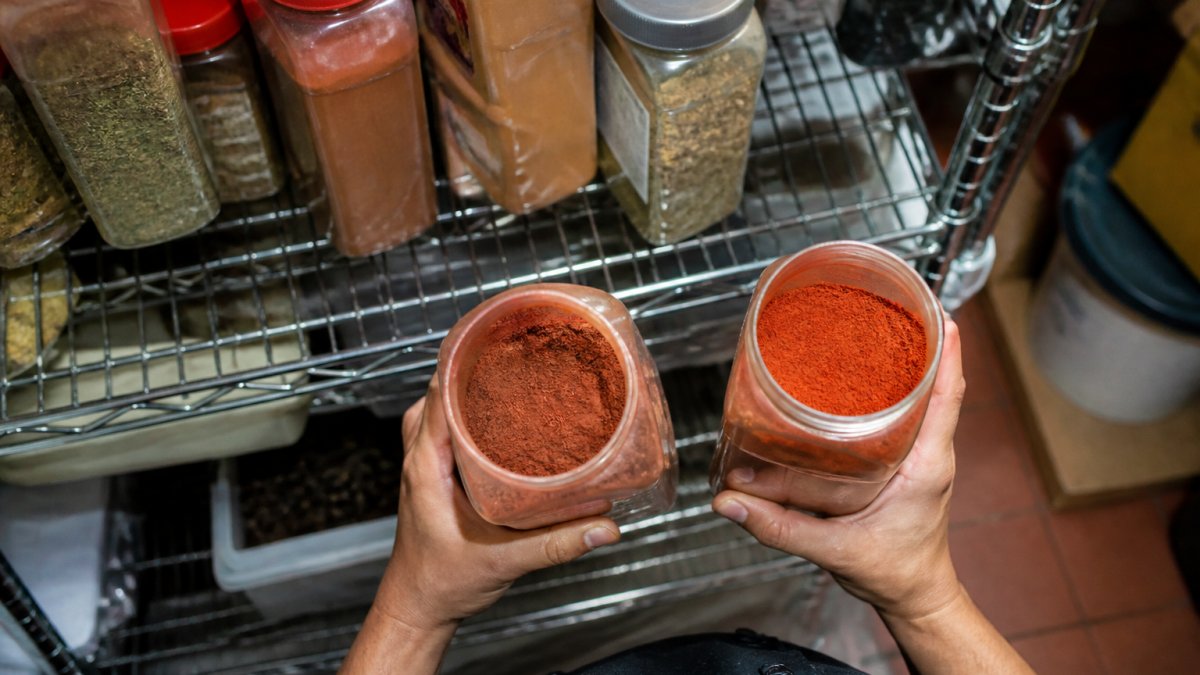
Overhead shot of a restaurant dry storage shelf with dated spice containers, one jar open showing faded reddish powder next to a fresh vivid jar, fluorescent lighting
Signs of Stale Spices You Should Never Ignore
Stale spices announce themselves before you taste them. The clearest signal is smell: a spice that should hit you at arm's length but only whispers when you open the jar is already past its useful life. Color is the second clue. Paprika, turmeric, and chile powders should look vivid; a dull, brownish cast means oxidation has set in.
Taste confirms it. If you have to double or triple a recipe's spice quantity to taste anything, the spice is the problem, not your palate.
Watch for these signals:
No aroma when the jar is opened
Faded or browned color in ground spices
Clumping or caking from moisture
A flat, dusty, or cardboard-like flavor
Whole spices that crumble instead of snapping
The Crush Test and Other Quick Kitchen Checks
The crush test is the fastest freshness check you can run. Press a whole peppercorn, coriander seed, or cumin seed between your thumbnails or under a spoon. A fresh one cracks sharply and releases an immediate burst of aroma. A stale one crushes softly and smells like almost nothing.
For ground spices, rub a pinch between your fingers and smell. Heat is a second test: bloom a small amount in warm oil. Fresh spices will perfume the pan within seconds; tired ones stay quiet.
The Benefits of Professional-Grade Spices for Busy Kitchens
Professional-grade spices are selected and packed for consistent performance across high-volume service, which changes the economics of a kitchen. When a spice is potent, you use less of it. That matters when you're seasoning the same dish fifty times a night and need the result to land identically every time.
Consistency is the real benefit. A restaurant's signature rub or house blend depends on the spice behaving the same way in week one and week ten. Stale stock makes that impossible, and no amount of recipe discipline fixes it.
There's a practical advantage too. Buying from a supplier that turns inventory quickly means what arrives is closer to harvest. That's the whole point of sourcing fresh specialty spices rather than whatever's been sitting on a shelf since last season. At Specialty Food Source, our Szechuan peppercorns and green peppercorns move through a working warehouse, which is how a spice keeps its bite.
SZECHEUAN PEPPERCORNS
Pro TipBloom ground spices in warm oil for 20 to 30 seconds before adding liquid. The fat carries the volatile oils that water can't, and the aroma you smell in the pan is the flavor you'll taste in the finished dish.
How to Store Spices for Maximum Freshness at Home or in a Restaurant
Storing spices for maximum freshness comes down to four enemies: heat, light, air, and moisture. Beat all four and you extend usable life considerably, even for ground spices.
Keep spices away from the stove, oven, and dishwasher
Use airtight containers, not the fold-over bag alone
Store in a dark cabinet or opaque jar
Never shake spice over a steaming pot, moisture gets in
Label with the date you opened it
Buy smaller quantities more often instead of bulk you can't finish
For restaurants, the storage question is really an inventory question. A 1KG bag of smoked hot paprika that sits open for six months will fade no matter how well you seal it. Buy to your actual usage rate, and rotate stock so older containers get used first.
Smoked Hot Paprika (Picante) – 1KG
Storage Mistake
What It Costs You
The Fix
Spice rack above the stove
Heat and steam kill aroma fast
Move to a cool cabinet
Open bag clipped shut
Air and light degrade color
Transfer to airtight jar
Bulk buy, slow use
Fades before you finish it
Buy smaller, more often
No open-date label
You lose track of age
Date every container
Shaking over the pot
Steam enters the jar
Measure into a spoon first
Watch OutNever store spices in a clear jar on an open shelf in direct sun. Ultraviolet light bleaches color and breaks down volatile oils, and a spice that looks pale usually tastes pale too.
Questions to Ask Any Vendor About Sourcing and Turnover
Ask about turnover before you ask about price. A vendor that moves spice quickly will always beat one with a cheaper list price and slow-moving stock. Here's what to put to any supplier:
How often do you reorder this specific spice?
Can you tell me the harvest or pack date?
Is this stored in climate-controlled conditions?
Do you sell retail and wholesale from the same fresh inventory?
Can you source hard-to-find or single-origin items on request?
What's your policy if an order arrives damaged or off?
That last question matters more than most buyers think. Packaging and handling decide whether a spice arrives potent or flattened, and a supplier's answer tells you how they handle problems. Specialty Food Source has been independently owned since 1991 and carries a 4.58 average rating from verified reviews, with customers regularly citing product quality and packaging.
Key TakeawayTurnover beats price. A slightly higher price on fast-moving stock costs less per usable ounce than a bargain on spice that's already faded.
Where Chefs in Brockton, MA Find Fresh Specialty Spices
Chefs in Brockton, MA find fresh specialty spices by buying from suppliers that turn inventory fast and offer local fulfillment, which shortens the trip from warehouse to kitchen. That's the practical answer to the question of where to find high-quality, fresh specialty spices that aren't sitting in a warehouse for months: buy close to the source of movement, not the source of storage.
Specialty Food Source operates a warehouse in Brockton with pickup available, plus free local delivery on qualifying orders across MA, RI, NH, and ME. For kitchens outside New England, nationwide shipping covers the rest. If you're searching for a spice supplier near me, the test is the same everywhere: does the supplier move product, and can they prove it.
Our catalog runs over 5,000 in-stock items for professional kitchens, including Pimenton d'Espelette, smoked hot paprika, and Szechuan peppercorns. Wholesale accounts come with a dedicated rep and standing weekly orders, so a six-person bakery can order 25 pounds of a single spice without a huge minimum. Browse the spice collection to see what's moving now.
PIMENTON D' ESPELETTE
Conclusion: Buy Fresh, Store Smart, Taste the Difference
The gap between a dish that sings and one that falls flat often comes down to how old the spice was before it hit the pan. Buy from suppliers who turn stock quickly, store what you buy away from heat and light, and taste the difference within a week.
Specialty Food Source stocks professional-grade spices for restaurants, bakeries, and serious home kitchens, with warehouse pickup in Brockton, local delivery across New England, and nationwide shipping. Wholesale accounts get one rep, one truck, and one invoice, plus bundle discounts on mix-and-match orders. Questions? Reach us at support@specialtyfoodsource.com or text (508) 941-8992.
Get started with Specialty Food Source and put fresher spice on every plate.
Frequently Asked Questions
How can you tell if dried spices are still fresh?
Crush a small pinch between your fingers and smell it. Fresh specialty spices release a strong, recognizable aroma; stale ones smell like dust or cardboard. Whole spices should still be firm, and ground spices should keep a vivid color rather than fading to brown. If a spice smells flat or looks dull, it has likely lost most of its volatile oils and will not add much to a dish.
Does buying spices in bulk ensure better quality?
Not on its own. Bulk buying only helps when the vendor moves stock quickly and stores it properly. A large bag of old spices is still old. Ask how often the vendor restocks, whether spices are repacked close to the sale date, and whether whole spices are available so you can grind them yourself. Fast turnover matters more than package size.
What is the shelf life of high-quality specialty spices?
Whole spices typically hold their flavor for about two to four years when stored in airtight containers away from heat and light. Ground spices fade faster, usually within six months to a year. Specialty Food Source packages items like Szechuan peppercorns and green peppercorns in resealable bags to help preserve freshness, and storing them properly extends that window.
Why do grocery store spices often lack flavor compared to professional-grade options?
Supermarket spices can sit in distribution centers and on shelves for many months before you buy them, so the aromatic oils that carry flavor have already faded. Professional-grade suppliers restock more often and sell to kitchens that use spices quickly. Buying from a source with fast turnover, like Specialty Food Source, means the spices reach your kitchen closer to their peak.